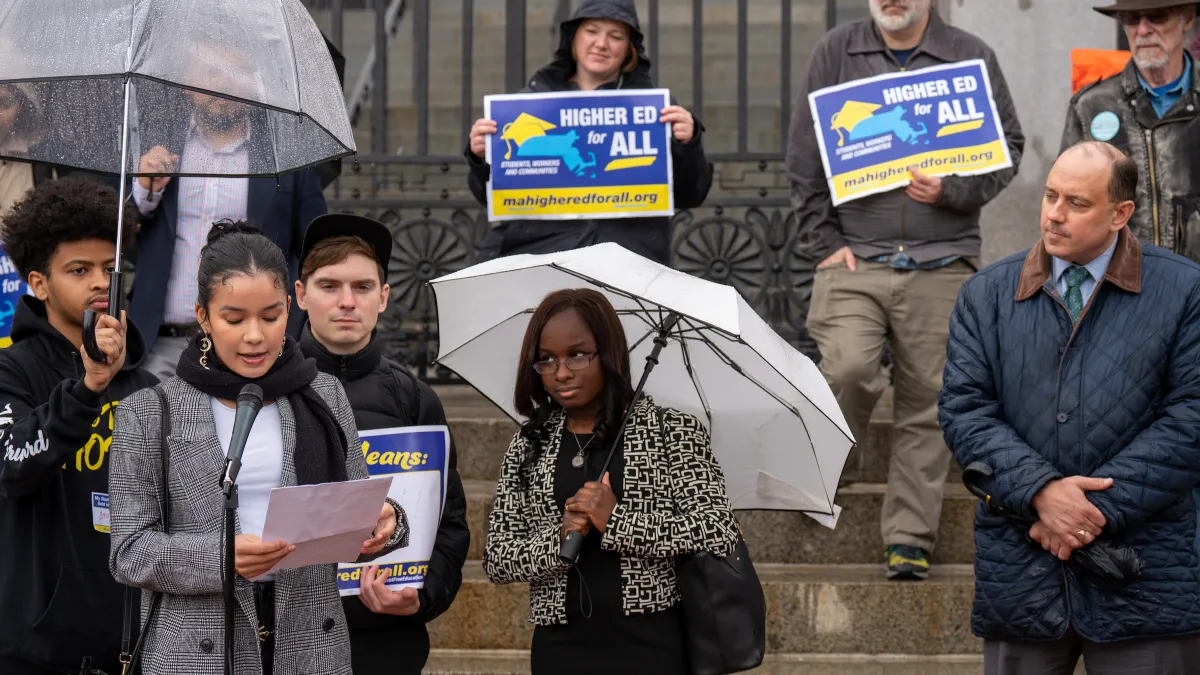
education is a human right Higher Education
Low wages cut into campus hiring and retention
To afford living in Massachusetts, about 30 percent of campus staff work extra jobs and about half.
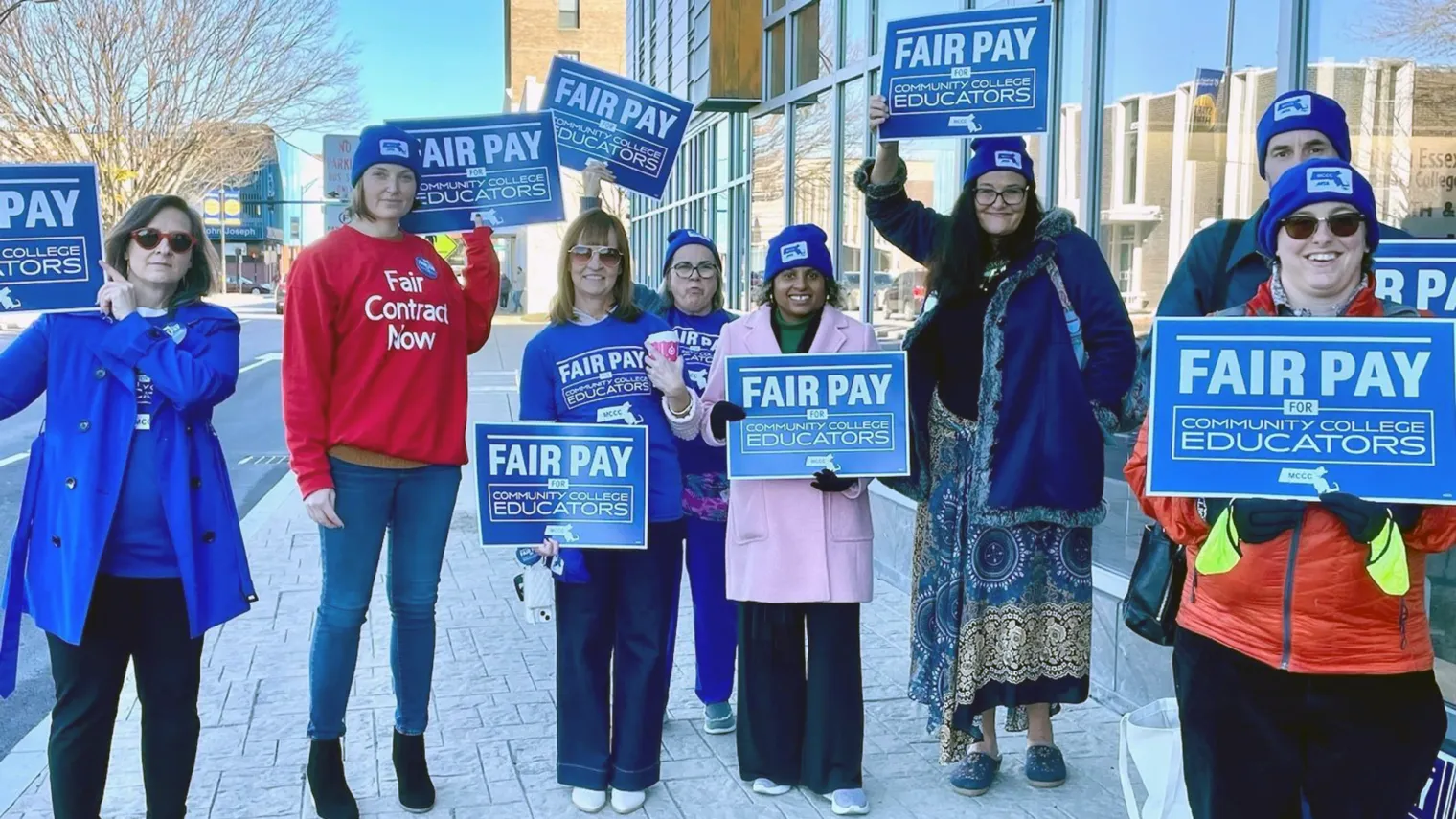
Faculty and staff working at public colleges and universities throughout Massachusetts are grappling with low wages that are forcing them to put off major life decisions, such as starting families, and requiring many to work multiple jobs to make ends meet.
Those were some of the findings of a survey the Massachusetts Teachers Association conducted of faculty and staff it represents at community colleges, state universities and the UMass system.
Wage Equity Study: Higher Education Faculty & Staff Salaries
A salary study conducted on behalf of the MTA shows that the wages of faculty and staff, when adjusted for cost of living, are substantially below those of colleagues working at public colleges and universities in nearby states, as well as at those located in states similar to Massachusetts.
Higher Ed on the move


Download & read "Lend & Rule"

Many of the critical decisions made about the way public colleges and universities operate – what types of courses are offered, how much financial aid is provided to students, the range of staff salaries and benefits – are not made on campus; they are made on Wall Street.
A book “Lend & Rule: Fighting the Shadow Financialization of Public Universities” examines the deep and troubling influence that the finance industry holds over public higher education.
Three MTA members — Rich Levy, Joanna Gonsalves and Barbara Madeloni —are among the authors of “Lend & Rule,” which looks at examples around the country of the ways in which institutional debt has become a driving force of what happens in public higher education.
The book is available to MTA members on the Libby app as part of the MTA Reads program. Instructions are available here.