If you used a combination of federal and private loans to fund your education, your repayment strategy needs to accommodate the crucial differences between those loan types. That goes double if you’re planning to go back to college and are still paying off existing loans, or if you have been receiving refinancing offers from private lenders such as SoFi or Citizens One.
Although you may not have appreciated it at the time you were filling out the Free Application for Federal Student Aid, otherwise known as the FAFSA, and figuring out whether you could even afford college, the sources of your loans matter. Federal loans, including Direct and Perkins loans, come with a variety of repayment options, including loan forgiveness. Despite efforts by the White House to defund the PSLF program through the budget, Public Service Loan Forgiveness and Teacher Loan Forgiveness programs will continue to be available to everyone who has already borrowed and who meets the criteria for relief.
To qualify for forgiveness, federal loans must be included in eligible repayment plans. Not all plans are eligible, and there are a number of other requirements. If you have Parent PLUS loans for your son or daughter, loan forgiveness is also possible — but again, only if you handle them properly. It’s complicated, which is why MTAB has partnered with Cambridge Credit Counseling to help you sort things out.
One surefire mistake is to consolidate loans already in eligible repayment plans after having made a number of qualifying payments. Doing so resets the clock on the 120 payments needed to qualify for forgiveness. An even bigger mistake would be to refinance those loans together with any private loans you may be carrying. If you do that, you’ll surrender all of the loan forgiveness options that may be available to you.
Private student loans have begun to offer some flexibility when it comes to the length of the repayment term, and refinancing can certainly result in lower payments. But if you have forgiveness options on your federal loans, keep them separate! There’s no way to undo a consolidation or a refi, so it is imperative that you understand the impact on your repayment and forgiveness options before you make a commitment.
Do you need more information before you create a strategy for your loans? Cambridge’s counselors are available to answer your questions free of charge, and they offer a low-cost vehicle to help you understand the repayment solutions that are available to you. The agency’s Student Debt Solutions portal, which is offered at an MTA member discount, is the best place to start. You can access the portal at cambridge-credit.org/mta.
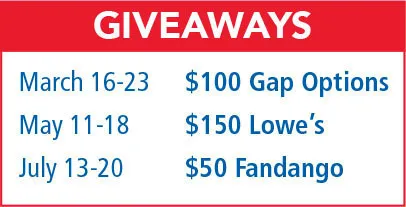
Upcoming giveaways
One of MTAB’s most popular programs is its online giveaways. There are plenty of chances to win over the next few months! To enter, you must create an account on MTAB’s website, mtabenefits.com. Log in to access the giveaways registration page. Make sure you opt in to receive MTAB email and you’ll be reminded to enter on the day the giveaway begins. Don’t miss the opportunity to win one of the gift cards listed here.

Editor: Elizabeth A. Bejoian The MTA Advantage is published three times a year as a supplement to MTA Today by MTA Benefits, Inc.
2 Heritage Drive, 8th Floor, Quincy, MA 02171-2119 Tel: 800.336.0990 … Fax: 617.557.6687 Website: www.mtabenefits.com
No dues dollars are ever used to market MTA Benefits programs.