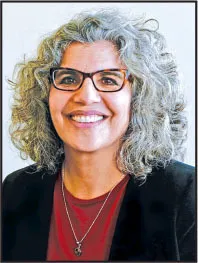
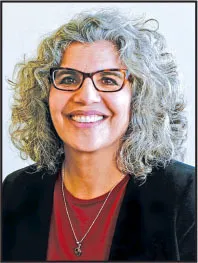
In October of 2019, I was proud to accept the Fontera Award given by the UMass Dartmouth Labor Education Center to the MTA, the New Bedford Educators Association and the New Bedford Coalition to Save Our Schools. This award is for educators who have made a commitment to democracy and justice. It was given to us because of our successful fight against the Department of Elementary and Secondary Education’s plan to expand the Alma del Mar charter school under a dangerous new "neighborhood" model.
Cynthia Roy, an MTA member who serves as co-chair of the NBCSOS, gave a powerful acceptance speech from a feminist perspective that provided an analysis of the current social context. Here is some of what she said:
The majority of public school educators identify as women. Teaching is a profession made up of women who have been fighting for their rights for a very long time. As a female educator, I feel like I am under attack. Despite our experience and level of education, we are told that we have no idea what we are doing. We are told that we have to listen to businessmen if we want to succeed in our careers and with our children. We are measured. And we are blamed. A feminist perspective on this injustice is useful because it helps us all reflect on who has been silenced and who has power.
Over the last two centuries, women have fought to gain a foothold in what once was a man’s profession. Today, a sizable majority of our preK-12 educators are women. But far from the classroom, the privatization agenda is led by men, including Mark Zuckerberg, Charles Koch, Jim Walton and Bill Gates. We have our own leader of the privatization movement right here: Secretary of Education Jim Peyser, former executive director of the right-wing Pioneer Institute and managing partner of the NewSchools Venture Fund.
The managerial class — composed of commissioners of education, chancellors, deans, superintendents, principals and the like — oversees the implementation of the system and, more often than not, seeks to force us into compliance under conditions of duress and/or threat. Its methods of control include:
- Demanding that we teach curriculum with "fidelity."
- Micromanaging instructional time.
- Increasing workflow.
- Beating us down with data.
- Abandoning us to deal with the increasingly complex needs of students in times of resource austerity.
But MTA local leaders and members are fighting back to regain our autonomy and dignity, improve working conditions, ensure livable wages, and reclaim the schools and colleges that our students deserve. More locals are using strategies of open, coordinated and coalition bargaining. There is an increase in solidarity actions both within and across locals. Members are building deeper relationships with each other, families and students.
And they are ready to take more militant action. Dedham, as you all witnessed, went on strike — for fair wages, but equally to secure a transparent sexual harassment policy and a way to manage student cellphone use.
Many Massachusetts superintendents have chosen to learn the wrong lessons from the Dedham strike and the recent wave of actions in locals across the state. The superintendent of the Dedham Public Schools, Michael Welch, gave a presentation to the Massachusetts Association of School Committees and the Massachusetts Association of School Superintendents on the 10 lessons he said were learned from the Dedham strike.
The presentation insults educators’ unions — and therefore women — but is very illuminating about the struggles that lie ahead. Here are the titles of the slides and some information about them:
- "Facts Don’t Matter — Emotions Sway The Group: Making an emotional connection with your client and engaging them will do more than simply presenting the facts."
- "Social Media Is Critical"
- "No One Holds Picket Signs For School Committees"
- "Get A Media Person For Your District NOW"
- "Open Bargaining" … with a picture showing a football stadium crowd around a nearly empty gridiron.
- "Keep Your State Organization Informed"
- "The MTA Is VERY Well Organized"
- "Teaching Is Isolating …Teachers Crave Connections & Belonging To A Group"
- "Value Is Created By Generating Conflict & Fear"
- Just Say No
The superintendents missed the fundamental lesson they should have learned: Just as our students deserve respect and dignity, so do our educators.
Here is a different way — a union way — of looking at the lessons, which apply to all of our struggles, from prekindergarten through higher education:
- Your stories do sway the group because they are powerful and credible. The public trusts educators as the authorities on education. Part of how we win is by telling our stories.
- Social Media Is Critical. Social Media also has the power to make us feel connected to the world of unionists who are fighting the same fights and winning. While it doesn’t replace face-to-face interaction, social media is a good way to reach members in an age when we all feel like we have such little time to participate in union activity.
- No One Holds Picket Signs for School Committees. That is because school committee members are not the people who have the greatest impact on the lives of students. Educators are.
- Instead of changing how they treat educators, the managerial class will spend precious public dollars on media firms to try to fight back.
- Open bargaining is democratizing the way locals bargain, drawing members in and building union power.
- Keep Your State Organization Informed. The superintendents are referring to administrator organizations, but we can deliver the same message to our locals. The MTA is here to support your local. MTA Vice President Max Page and I have spent our tenure traveling across the state acting in solidarity with our members. Invite us to your local.
- The MTA is INDEED VERY Well Organized — and the MTA is you.
- Teaching has become more isolating — by design, to keep educators from organizing to change the system. Educators do crave authentic connections and want to belong to a group whose members share the profound purpose of improving learning, working and living conditions for all — and creating a better world.
- The superintendents have reduced our legitimate concerns to a ploy to generate conflict and fear — so we must keep building our collective power to change our circumstances.
- We Are Just Saying No — to disrespectful treatment, retaliation, the lack of funding, charter schools, privatization and more. Together we are challenging the power structures and changing the status quo. We are winning.
Cynthia Roy summed up our way forward by reminding us that the way in which we approach our union work is "an opportunity to work towards an emancipatory agenda with others who feel oppressed, too, like our students and their families. This sort of collaboration between unions and communities is how we are going to save our schools and move society in a direction of equity and social justice; I am sure of it."
Letters policy
MTA Today welcomes letters to the editor from MTA members. Letters should be no longer than 200 words. Each letter submitted for publication must address a topic covered in MTA Today, must be signed and must include the writer’s telephone number for confirmation purposes. Opinions must be clearly identified as belonging to the letter-writer. We reserve the right to edit for length, clarity and style. To submit a letter, mail it to MTA Today, 2 Heritage Drive, 8th floor, Quincy, MA 02171-2119, or email it to mtatodayletters@massteacher.org. For additional information, please refer to the guidelines posted on www.massteacher.org.