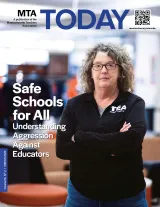
According to a 2022 article in NEA Today, "the crisis of violence" across our nation’s public school system has become a primary factor in the educator exodus. Educators are reporting higher instances of anxiety and depression, as well as a decline in their professional capacity, classroom effectiveness and overall health. This, in turn, harms student engagement and academic achievement.
Many educators have shared concerns regarding their limited knowledge about mental health, trauma-informed practices and effective behavioral management skills in the classroom. To mitigate risk, suggested measures include:
- Determining whether the student has a Behavioral Intervention Plan. If the answer is no, a plan should be developed for any student who exhibits aggressive or threatening behavior.
- Ensuring that educators are self-aware of verbal and nonverbal cues. Suggested strategies include active listening, a calm tone and controlled movements.
- Validating feelings. Do your best to reiterate that you hear and understand a student’s point of view and attempt to solve problems by providing choices or offering alternatives.
- Having a strategy. Make sure your phone is available and you have clear access to the door.
- Positioning yourself physically to keep watch over your students. Vigilant supervision allows educators to be consistent while securing their personal safety.
- Following up. If a concerning incident occurs, the student should complete a corrective action plan to help them, as well as the educator, understand triggers, unhelpful responses, corrective behaviors and assess wanted-versus-unwanted outcomes.
- Immediately reporting any concerns to the school administrator.
Addressing the problem adequately will require resources, funding and emotional investment from all involved. Proactive-versus-reactive interventions are preferred. Reaching vulnerable students requires a bottom-up approach to engagement, starting with the daily experiences and needs of students, educators and parents, with a focus on classroom culture, social-emotional learning and environment. Understanding the psychology behind the oppositional student, the avoidant student, the angry student and the bully is incredibly valuable. To develop this understanding, school systems should evaluate the "whole" student. Such a screening would help educators understand important facts about other areas of their student’s life, such as the health of their family system, cultural background, religious preference, situations that may make them upset, their personal strengths and shortcomings and so on. A screening can help identify risk and protective factors for each student.
While these suggestions alone won’t eliminate school violence, they serve as a starting point to help educators reduce risks while supporting students.
This article was written by Mary Ferrara, LCSW, PLLC of MyRosalie, MTA Benefits’ mental health services partner. To learn more about the mental health resources available to MTA members, please email info@mtabenefits.com.
No dues dollars are ever used to market MTA Benefits programs.