For his edition of MTA Today, we asked educators working in various roles to reflect on how their professional lives have changed since the start of the pandemic, what it’s like today in schools and on campuses, and what they expect in the months ahead.
Bianca Jones, a school nurse in Watertown, has been working in all of the district’s schools since September 2020. She previously was a nurse in a hospital working with COVID-19 patients.
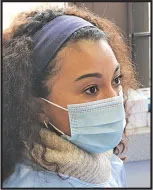
I’ve only worked in the schools during the pandemic. Starting in September of last year, the students weren’t even in school. Then we went to hybrid learning, then we went to full time. From winter break until now, we’re definitely seeing the cases go down significantly. That’s helped us be able to manage our time better and not rush through things.
We did contact tracing in the beginning of the year. For elementary school, the entire class would be considered a close contact. For middle and high school, we would check to see who was seated around them and whom they were with throughout the day.
But with the changes in policy, and from doing the test-to-stay, and showing there isn’t much school spread, we only contact trace if we feel it’s necessary, if the student isn’t good with mask wearing, or if they’re in a really close setting.
I came from a hospital, after four years, and I was on the COVID unit, so my mindset was … we have power to control the safety of the students. We focus so much on that and so much on the policies. I felt like it was a controlled setting. Everyone — employees — are nervous about it, but I just keep telling them, keep wearing your mask and protect yourself. In-school spread is barely there.
I had COVID patients for months in the hospital … and I never got it. I just try to give them peace of mind from a medical standpoint.
Brenda Charles is a first-grade teacher at Burbank Elementary School in Belmont. She has 11 years of experience as a teacher and a paraprofessional. The past two years have been an exercise in adaptation. Her students are adapting as well.
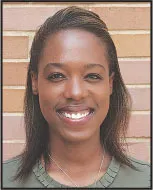
Some of them didn’t get the practice as a kindergartner of learning how to share and taking turns — things like being patient and problem solving. We’re kind of doing those social skills now.
There wasn’t a lot of opportunity last year because we were socially distanced. We had our own materials. My thought was this school year was probably going to be similar to last year. The only difference was that we were going to be here every day, all day long.
Our district has pooled testing. We also have the weekly report — a report of how many staff and students, which school, and they tell you how many people tested positive. When we came back, they had reporting from the week of the holiday break.
I was a little worried. I know we’re all using masks. We’re using hand sanitizer on everything. I think we’ll be fine. But when we got that report it was very high. There was uncertainty. I felt it was very important that we were in school. It was important for the students to have the experience of how to be a student, building a routine and having opportunities to play with friends and having interactions with peers their age.
Wilmore Webley is an associate professor of microbiology and associate dean of the Office of Inclusion and Engagement at UMass Amherst.
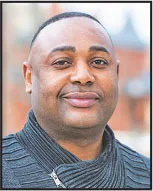
It had been two months since my students in my Outbreaks class and I started tracking cases of severe pneumonia in China, later identified as COVID-19, when the decision was made to go remote after spring break. This momentous decision by our college administration was the beginning of a tumultuous journey of disruptions in teaching, research, service and mentoring.
As the pandemic continued over the last two years, I taught classes in person and virtually while balancing child care. Each semester had its own measure of uncertainty — including the fear of becoming infected in my lab by students who sometimes became infected, since I was not vaccinated until March 2021.
The thought of getting the virus and then infecting my unvaccinated family members was always at the forefront during those times. The required twice-weekly testing of students and the once-weekly testing of faculty, coupled with the excellent testing and vaccination center — providing results in 24 hours or less — gave me and many of my colleagues a sense of relief and confidence going into the classroom.
In addition to Zoom fatigue, students were struggling with a host of personal, family, political, racial and societal issues that were exacerbated by the isolation brought on by the pandemic. My classroom, office hours and advising appointments became a therapeutic outlet for many students who struggled to stay motivated amid the uncertainties.
I soon realized that the lack of long weekends or typical holidays — combined with serving as a lachrymatory for emotional encounters with students — had left me drained physically and emotionally. I longed for in-person encounters with colleagues and friends and the opportunity to see the faces of my students without the masks. I am still waiting as this pandemic drags on.
Peg Holloway is a bus driver for the Worcester Public Schools and a member of the Educational Association of Worcester.
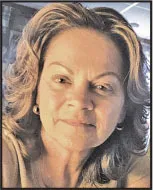
They closed the schools on March 16. I remember the date because it’s my birthday. Some of the drivers kept working, bringing homeless people to shelters and delivering Chromebooks to schools for students to pick up and use while they were working remotely.
I drive students who are in special education programs. They were the first ones to go back to the schools, in September 2020. We did small groups that went in for two days.
So I’d drive one group on Mondays and Tuesdays and another group on Wednesdays and Thursdays. We drove three or four kids at a time and slowly added kids.
All the kids would come with their masks, and the parents were really good about making sure the kids did that. Having time off to think about what was happening in the world, people everywhere were scared about going out, about going to work. A lot of drivers were nervous, but we had a job to do. These students needed to be at their programs.
We needed to protect ourselves. We have a strong union, and the union made sure that the city worked with us to get what we needed.
Tom Meyers, a retired social studies teacher, is a former Andover Education Association president who served for more than two decades. He also is a Senate District Coordinator for the MTA.
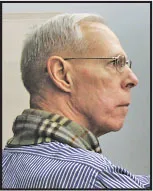
The role as an SDC has been a dream job because it keeps me active in the two things that I’m most interested in: public education and democratizing the workplace through labor union activism.
When the pandemic hit, it obviously changed the way we all worked. With Zoom, the major disadvantage is that you’re not picking up on human emotions, inflections, body language and voice. It’s not the same intensity.
One of the advantages of working in the pandemic via Zoom is you can bring people in from all over the place for meetings, and one of the things that we’ve been able to do in the Merrimack Valley is coalition work. It’s really nice to see locals from different school districts coming out to support each other at rallies and at school committee meetings for fair contracts. In the summer, when the COVID-19 numbers went way down, I was able to get out and do some door knocking and was able to get to some of the festivals in Lawrence, where I collected quite a few commitment cards for the Fair Share Amendment. It’s important for us to articulate why the FSA is important to public education.
Despite Zoom and some limitations on in-person gatherings, what brings joy to me is that I’m still doing work that is aligned with my values and is meaningful. It’s fundamentally working to improve education and that provides a lot of fulfillment.