#OnlyWhenItsSafe
We have been very clear. Schools should reopen for in-person learning #OnlyWhenItsSafe — safe for students, families, educators, individual communities and the Commonwealth as a whole.
Educators are the experts on what it takes to keep our students safe while giving them the education they deserve. Unions are the experts on keeping our members safe. And because the state is failing to protect school communities, the MTA has stepped up to lead.
Our incredible Environmental Health and Safety Committee, made up of rank-and-file members, set safe reopening criteria in consultation with health and safety experts.
- Indoor air quality and ventilation must be brought up to appropriate regulatory and industry standards.
- Rapid COVID-19 testing must be made accessible, routine and free for students and staff.
- Appropriate community and public health benchmarks must be set and met.
The MTA Board of Directors adopted a policy that concludes: "Until the point when districts and the state can meet these [health and safety] criteria, we will refuse to return to unsafe school buildings and we will use the 10 additional days at the start of the 2020-2021 school year before instruction of students begins to redesign learning." Locals across the state have enthusiastically endorsed this position and are organizing to make it happen.
We know that you are longing to get back to in-person learning with your students — and that they are longing to get back to school with you and their friends. We also know that for some of our students, school is the safest place in their lives.
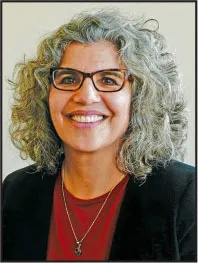
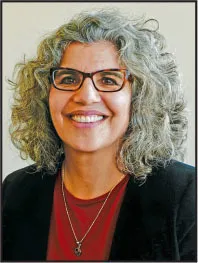
As an elementary school teacher of 30 years, I know there is no substitute for settling in side by side with my students and connecting with them personally. I know how central playing with one another and sharing books, toys and even hugs is to their social and emotional wellness and academic development. There is no replacement for in-person learning in non-crisis times. But even if we were back in school using a hybrid model, none of that would happen until the pandemic is over.
Crisis education under COVID-19 has been a hardship for everyone: for families who need schools to serve as child care so they can work; for our members who are caring for other people’s children while tending to their own needs and families; and for our students themselves. But we also know that the alternative is far worse.
Being back in school right now would mean having to decide what to do every time someone develops a cough. COVID-19 can spread like wildfire. Just look at the summer camp in Georgia where 260 campers and staff tested positive out of 344 results.
Inevitably, it would mean some student or staff member would test positive, requiring close contacts to quarantine for 14 days and requiring overextended educators to figure out how to make sure students in quarantine are still being educated.
The harsh reality is that a student, a staff member or one of their relatives will likely become very ill — or worse. The emotional trauma of such an outcome would be dire. Black and brown communities are at greater risk of this happening, which is why most parents of color support remote learning at this time.
These risks aren’t just theoretical. Evidence about the risks of reopening schools too soon is mounting. Two weeks after Israel reopened its schools in late May, cases skyrocketed. In July, a large study out of South Korea showed that children over age 10 transmit the virus as easily as adults. Right here in Massachusetts, more than 8 percent of children living in Department of Children & Families facilities contracted the virus. In states where schools have opened, many are already having to close.
Experts from institutions such as Harvard’s T.H. Chan School of Public Health have pointed to the conditions that don’t yet exist in Massachusetts, including making sure that well-maintained ventilation systems are circulating air properly in schools. These conditions helped inform our reopening criteria. But our governor and education commissioner haven’t acted on them as of this writing.
What now?
It’s through the union that we are going to win the conditions that we need to resume education safely and bring back joy in the year of COVID-19 learning. We have built a statewide campaign that has brought local affiliates together to coordinate demands, bargain and hold actions across the state. We have 12 active regional solidarity networks, an Educators of Color affinity group and county teachers’ associations, all engaging in the campaign. We are hosting membership meetings with nearly 10,000 members, while 22,000 of you are talking on Facebook through Massachusetts Educators United.
While negotiating with the state, we asked you to act. You flooded Education Commissioner Jeffrey Riley’s voicemail and email inboxes, demanding 10 days of planning time before instruction resumes. Mission accomplished.
Your activism is why we see a growing number of school committees voting to start the school year virtually.
Once we win a virtual start to the year, we must redesign education to make remote learning meaningful and safe. We must connect with at-risk students, including those who lack the technology, internet capacity or quiet home environment needed to stay engaged.
The harsh reality is that a student, a staff member or one of their relatives will likely become very ill — or worse. The emotional trauma of such an outcome would be dire. Black and brown communities are at greater risk of this happening, which is why most parents of color support remote learning at this time.
During a call with more than 7,500 members on July 29, we asked for your ideas about how to make remote learning better. We received more than 1,900 ideas in just three minutes. Let’s use the 10 days at the start of school to harness your collective best ideas and insist that districts include all Education Support Professionals in planning and implementing them.
For the last six years we have been fighting for the public schools and colleges our communities deserve. We must now fight for the public schools and colleges that communities demand — where Black and brown lives matter in policy, in practice and in curriculum. While the details are different in higher education than they are in preK-12, it is the same struggle. Among our demands are recalling the 2,000 educators who have been laid off in our preK-12 schools and rescinding the furloughs and layoffs and the closing of programs in higher education.
We must show our strength as a union and stand together for the most vulnerable members in our own locals and for the most vulnerable locals in our state. The virus knows no boundaries. If your neighboring district opens too soon, it is only a matter of time until COVID-19 spreads to yours.
This fall, let’s stand together as one and declare: #OnlyWhenItsSafe.
To learn more about the MTA’s #OnlyWhenItsSafe campaign, follow our social media, read my member emails and check our website, massteacher.org, on a regular basis.
Letters policy
MTA Today welcomes letters to the editor from MTA members. Letters should be no longer than 200 words. Each letter submitted for publication must address a topic covered in MTA Today, must be signed and must include the writer’s telephone number for confirmation purposes. Opinions must be clearly identified as belonging to the letter-writer. We reserve the right to edit for length, clarity and style. To submit a letter, mail it to MTA Today, 2 Heritage Drive, 8th floor, Quincy, MA 02171-2119, or email it to mtatodayletters@massteacher.org. For additional information, please refer to the guidelines posted on www.massteacher.org.