Photographs by
Educators talk about the joy and passion they have for teaching, in creating lessons and watching as that creativity connects with students in a classroom. But in recent years, many have felt undermined and discounted in their profession.
Many educators now say they’re experiencing a malaise about the teaching and learning environment in their schools. They describe classrooms that have turned into testing centers, with curriculum and lessons focused on the content most likely to end up on the MCAS and other standardized tests, and healthy outlets for students, including recess, shortened or eliminated.
They say their students have become more disengaged and more prone to lashing out in anger or frustration. Elementary school students are throwing chairs, not just tantrums. Older students have told counselors and educators that the presence of police in schools weighs heavily on them, and unfairly focuses on students of color.
It’s all adding up to stress and pressure and anxiety - an unfolding mental health crisis. Students are missing school in greater numbers, according to state data. Since the pandemic, the number of students being disciplined has risen in several categories, including fights. Turnover among educators has increased, according to a recent study.
These circumstances are not something that can be attributed solely to an absence of critical staff members, the COVID-19 pandemic, digital devices, social media or standardized testing, according to educators, but a mix of all of them. A panel of experts delved into these issues, and proposed 26 specific solutions, in a new MTA WikiWisdom report: "Classroom Solutions to the Mental Health Crisis in Our Schools."
Individual locals, and some districts, are responding in comprehensive ways. Taunton, for example, has strengthened professional development surrounding mental health and social-emotional learning for staff and parents. A district mental health team works with various schools. The purpose is to develop interventions that work.
Ask MTA members and educators what they think should change to make things better and most have specific recommendations.
The first, cited by many, is for state officials and district leaders to simply listen to them. For all of their experience and expertise, professional educators are often ignored when policies are set, said Gina Potorski-Dahl, an English teacher at Chicopee Comprehensive High School and a member of the Chicopee Education Association.
"Teachers, paraprofessionals, ESPs, custodians, clerks, cafeteria workers are the experts," Potorski-Dahl said. "Ask them what needs to be done. Stop asking people who haven’t been in a school in decades. Stop asking people who don’t know what the climate of the building is, or the climate of education is, and ask the experts."
Student voices, as well, deserve to be heard. Theresa Bryant, a longtime adjustment counselor and a member of the Springfield Education Association, now on leave for work as a social justice organizer, working with the district’s Diversity, Inclusion and Racial Equity Initiative, said she learned how negatively impacted students were by the presence of police in school buildings, and surveillance cameras, when they spoke to her.
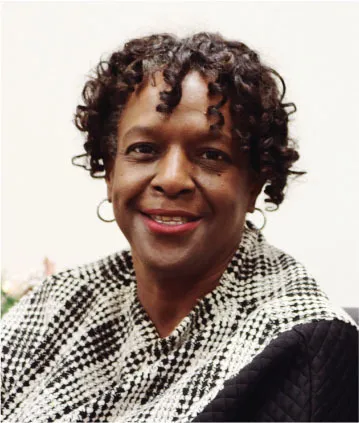
"Student voices, especially students of color, their voices are often silenced," Bryant said. "Because people feel that students don’t have the wisdom or the knowledge to talk about what their needs are. And that ties into the whole existence of educators of color, too, who are devalued and discriminated against."
Adequate and appropriate staffing in schools quickly rises to the top when educators are asked what can help alleviate the stress that educators and students alike are experiencing. That may look different depending on the grade level and subject taught, as well as the needs of students. Over the past several months, several MTA locals that are engaged in bargaining have sought more school psychologists, counselors and paraprofessionals, and improved pay and working conditions for them.
The No. 1 recommendation in the WikiWisdom report is to bring more licensed mental health professionals into schools, including by embedding in contract language the proper ratio for students to mental health professionals. The national recommendation is one psychologist for every 500 students; and one counselor for 250 students.
All of these professionals play a role in helping students who are in distress. Donna Grady, who is president of the Franklin Education Association, and a kindergarten teacher, said her district doesn’t have enough paraprofessionals. How important are they? In her school, four kindergarten classes share three paraprofessionals. Which means that 5-year-olds who need to go to the bathroom or have trouble with an activity have to wait if their class lacks one. That’s leading to increased frustration among children.
The pandemic – which greatly reduced the amount of time young children spent socializing with other children – is one of the impacts now being seen in classrooms.
"They’re little, so they want what they want," Grady said. "Very often, what we’re seeing now is an increase in frustration and the inability to handle that frustration for children. Kids are melting down. We’re evacuating classrooms for safety and for the dignity of the children."
An evacuation involves someone leading the other children out of the classroom so the teacher can resolve the issue affecting the child in distress. It’s for everyone’s safety. It’s happening more frequently, said Grady, a 35–year veteran of local schools.
"What we’re seeing is much more physical. Kids flipping tables and chairs." Grady said she suspects the causes include the pace of curriculum, which has accelerated, as well as the pandemic, which didn’t allow young children to socialize, to learn how to resolve differences.
The impact of standardized tests is being felt too. In kindergarten, students used to have up to eight weeks to learn routines and establish relationships with each other. Then that became compressed as the pressure built to have students on-task in learning, complete with expecting small children to write on Chromebooks.
"We’re not operating like it’s kindergarten," she said. "We’re operating like it’s first or second grade. Kids aren’t physically or cognitively able to do that."
Mental health training and education, for schools and parents, has become an increasing focus of the U.S. Centers for Disease Control and Prevention and professional associations that specialize in health care. The CDC in December published a six-point action guide for schools and district leaders, aimed at educating students about mental health.

A national survey of teenagers in 2021 by the CDC found increased reports of sadness, particularly among young women. Fifty-seven percent of girls reported they felt sad every day for at least two weeks in the previous year, according to the New York Times. The survey also found high rates of depression and suicidal thoughts among gay, lesbian and bisexual youth.
The National Association of School Psychologists has a training program aimed at crisis response in schools, which could include physical as well as psychological components. Beginning before the pandemic, many youths were reporting mental health challenges, said Ben Fernandez, a lead trainer in the NASP program, and a school psychologist in Virginia, who has led training in Massachusetts.
Rebecca Fuller, co-president of the Sharon Teachers Association, has become more focused on the mental health of her students. She knows that if they aren’t in a good place, a safe place, in their own minds, they aren’t able to learn.
She tries to ratchet down their self-expectations, to relieve the pressure. Even in fourth grade, many of her students put too much pressure on themselves.
"I say: ‘Are you doing your best?’ I say: ‘Every day your best will look different, depending on what’s happening outside of school.’ If they had a tough time sleeping or a fight with a parent or sibling, their best will be different, which is okay."
Underscoring these conversations is that in many schools, the day is increasingly focused on tests in a few subjects. The pressure of MCAS has seeped into even the youngest grades.
That hyperfocus has led districts to adopt standardized curriculum and pacing – in which all students in each class will be studying the same material at the same time – and purchase edtech programs that promise that standardized scores will increase if students and educators spend hours online.
Cynthia Roy, who teaches biology at Bristol-Plymouth Regional Technical School, has taught students in an MCAS-tested subject for more than 14 years.
On top of the pressure that a high-stakes standardized test places on students, schools that are focused on scores have cut back on creative and healthy outlets for students – including electives, art and recess. Even lunch is compressed. Is it any wonder students are acting out?
Roy has heard students describe school as a test center, or prison. The MCAS has eroded the morale of educators and the well-being of students in ways that may not seem obvious.
"For both students and educators, we’re in a really oppressive environment right now because of standardized testing," she said. What works are the very things that districts are eliminating.
"Mental health workers, wrap-around services, art, electives. All of these things we’re talking about are absent from our schools now. We need to actually invest in the things that we know work."
To read the MTA WikiWisdom report, "Classroom Solutions to the Mental Health Crisis in Our Schools," please visit https://massteacher.org/wikiwisdom.