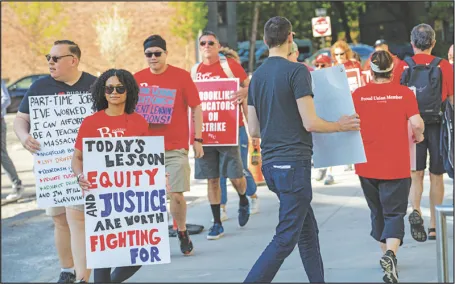
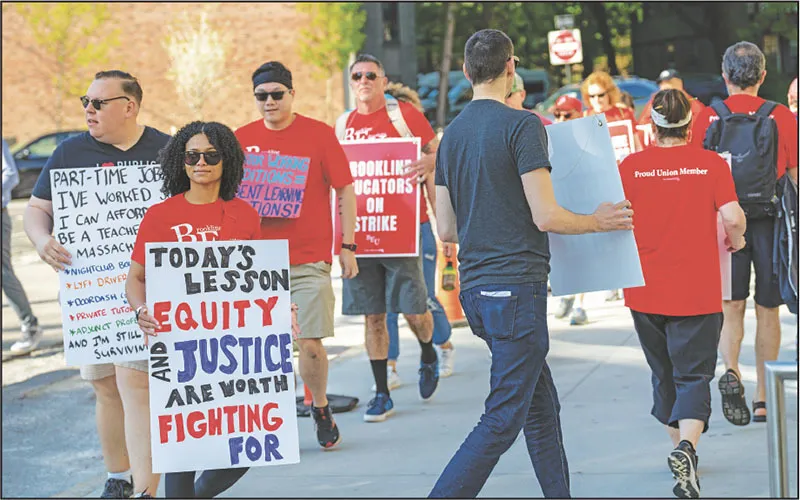
A wave of determination swept through educators’ unions this spring, with locals taking bold actions — including going on strike in one community — to win significant gains in their contract fights.
Brookline, Tewksbury, Belmont, Somerville and Cambridge are among the districts where local unions did extensive organizing and took escalating actions to break through stalemates in bargaining with their respective school committees.
They also learned from each other’s experiences.
While Brookline educators ultimately engaged in a strike, several other locals indicated they were prepared to do the same, which prodded districts to reach agreements that met union demands rather than face labor disruptions.
Contract terms prioritized by local unions included increased wages for their lowest-paid members and specific requirements for preparation and collaboration time. The local unions got these terms in writing rather than leaving elements of professional consensus to chance or management discretion.
Several recently settled agreements addressed issues of racial equity and plans to diversify the school workforce, as well as higher pay for Education Support Professionals. They also included measures that will help protect work-life balance and improve students’ social and emotional well-being.
Union members were resolved to get meaningful improvements in working conditions, salaries and benefits.
"What I heard on the picket lines was how members were feeling unprecedented empowerment and a sense of self-respect," said Jessica Wender-Shubow, president of the Brookline Educators Union.
The BEU called a strike on May 16 following a weekend of round-the-clock bargaining sessions. Before getting to that point, the BEU conducted a rapid assessment of its membership, with members holding hundreds of one-on-one conversations. Members who were identified as being the most willing to take bold steps helped organize escalating actions that included standouts and rallies directed at rebutting the Brookline School Committee’s intransigent positions on salaries, workload and racial justice.
By the time the union called its strike authorization vote, support was nearly unanimous. Almost all of the members walked the picket lines.
"The School Committee became our best organizer," Wender-Shubow said. "When they created ‘poison pills’ in their contract proposals and threatened to impose conditions we could never accept, that’s when people got radicalized."
Cambridge Education Association President Dan Monahan painted a similar picture. When that district’s lawyers — rather than elected School Committee members — led management bargaining, the concerns of educators were dismissed or ignored.
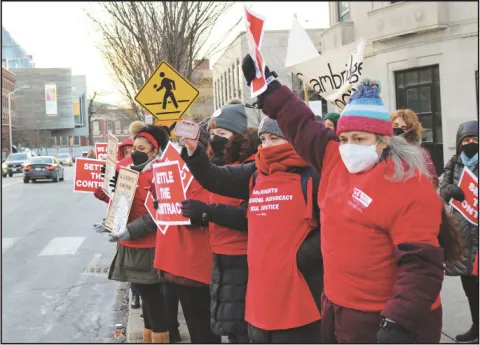
The CEA responded with public standouts and other forms of community outreach. The bargaining dynamic shifted, Monahan said, once that pressure was applied. The union was able to win key provisions on pay and parental leave, as well as increasing its influence on labor-management committees.
In an adjacent community, the Somerville Educators Union effectively rallied citywide support for a bargaining platform that prioritized students’ mental health and well-being, as well as living wages for the district’s paraprofessionals.
Over the past three years, according to SEU President Rami Bridge, union-led efforts have increased pay for paraprofessionals by almost 70 percent.
"Our union has shown that when educators stand up and demand changes to an unsustainable system that pays poverty wages to paraprofessionals, fails to staff schools appropriately, and burns educators out, we can organize and create positive changes for ourselves, our schools, and our community," Bridge said after the local ratified a contract over which it was prepared to strike.
"We are thrilled to have found our district and local elected leadership willing to meet our demands with compassion, understanding, and increased resources," he added. "This is a powerful first step in building a sustainable school system that values, rather than exploits, educators."
Belmont educators, who were working without a contract, rejected the district School Committee’s claims that the town could not afford fair cost-of-living adjustments. The Belmont Education Association successfully made its case through rallies and communication blitzes to elected officials that detailed how failing to adequately pay all Belmont educators competitive wages would undermine the quality of the town’s public schools and their ability to attract and retain the best employees. The BEA also made a persuasive argument that the town could afford a fair contract.
A rally on June 1 drew not only hundreds of BEA members but also Town Meeting members, students and community supporters who amplified the educators’ arguments for a fair settlement. With the local poised to take a strike authorization vote, the district and union reached an agreement that will extend through the 2024-2025 school year. It provides adequate raises, preserves existing health insurance cost-splits and pays ESPs for prep time.
Educators supporting each other across Massachusetts locals was a consistent factor in the campaigns for fair contracts.
The Tewksbury Teachers Association was among the first to publicly declare its readiness to strike in the spring. It ultimately turned a strike-authorization vote into one for contract ratification after the School Committee moved to meet educators’ demands.
Hearing from Tewksbury union leaders inspired Brookline members to act, Wender-Shubow said. Leaders from Belmont and Somerville likewise attended BEU rallies, drawing inspiration for their fight. And a contingent from Brookline made its presence felt at that large June 1 rally in Belmont.
MTA President Max Page and Vice President Deb McCarthy both attended the Belmont rally, which was held shortly after their election, as they prepared to take office.
"What we saw in Belmont and in Brookline — and in all of the other locals that are organizing for the working conditions that educators deserve and that will benefit students — is the continued growth of union power and solidarity. Members are showing up for each other’s fights, winning public support for educators’ goals, and demonstrating their willingness to strike," Page said. "Working as hard as educators did through the pandemic and then being treated with indifference and disrespect by school committee members and their hired lawyers simply will not be tolerated."