
MTA members across the state are learning that there is more to the adage about "power in numbers" than they thought.
There is also knowledge in numbers, and locals are banding together by region to better understand — and address — common concerns.
In Western Massachusetts, locals have worked in concert to successfully fight a charter school expansion that would have affected more than 30 communities. Locals in Southeastern Massachusetts have acted collectively to protect access to health care. And members of locals in North Shore communities are now regularly attending each other’s standouts and other actions.
Charters, health care and contract bargaining are topics bearing down on every public school educator, but over the past couple of years MTA locals have been much more likely to work in coalitions to address such issues together.
The Berkshire Educators Action Network — known as BEAN — formed several years ago when educators grew frustrated with a growing number of bureaucratic mandates and a rising emphasis on high-stakes testing. The two issues were eating away at teacher autonomy and valuable time for learning.
Since then, the Western Mass Educator Action Network — known as WeMEAN — has formed in Greater Springfield, and locals in Southeastern Massachusetts communities have created the Southeast Massachusetts Education Action Network, or SoMEAN. MTA and AFT locals north of Boston have formed the Merrimack Valley Labor Education Coalition.
"The support we give each other allows us to understand the bigger picture we all face," said Scott Beaulieu, president of the South Hadley Education Association and a WeMEAN activist.
WeMEAN’s growth exemplifies the value of coalition building. Almost two years ago, Mary Cowhey, a Northampton teacher who was serving on the MTA Board of Directors, began encouraging colleagues in different locals within the area she represented to get together. At about the same time, MTA members participating in a summer member organizing program were hearing similar stories and concerns from educators across a range of communities.
In Holyoke, the organizers were learning that members were afraid to speak out, given that the district was being run by a state-appointed receiver with expanded authority to discipline or fire educators.
But as members of a coalition, said WeMEAN member Sadie Cora, president of the Northampton Association of School Employees and a Holyoke resident, educators had more power to fight for their colleagues. "We could go there and speak out for them," she said.
"When others are so strongly supporting you, it provides validation for what you feel, and it made me feel confident in what we were doing," said SoMEAN member Tasha Cordero.
The enthusiasm for a coalition truly blossomed in the fall of 2018, when the Chicopee Education Association organized a rally in favor of the Promise Act, the precursor to the recently signed Student Opportunity Act. Scores of educators showed up wearing T-shirts bearing logos from surrounding districts.
"We surprised ourselves," said WeMEAN member Stephanie Joyce, a member of the Amherst-Pelham Education Association.
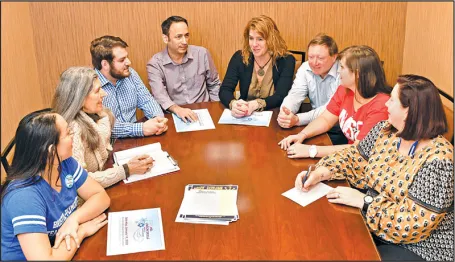
The WeMEAN coalition now regularly sees members from roughly 15 locals at its meetings, and it is taking on projects such as analyzing participating locals’ contracts and forming a group to study issues raised by Education Support Professionals.
"These coalitions are breaking the isolation, building new relationships and amplifying the voice and power of our members and their community allies," said MTA President Merrie Najimy. "Whether confronting hostile employers, fighting for fair contracts or organizing opposition to charter schools, coalitions are demonstrating that it is no longer business as usual. Not only are we building power, but we are demanding — and earning — respect."
Tasha Cordero, president of the Bristol-Plymouth Teachers Association, said the power of the SoMEAN coalition was felt when her union confronted its School Committee over unsafe conditions at Bristol-Plymouth Regional Technical School.
"When others are so strongly supporting you, it provides validation for what you feel, and it made me feel confident in what we were doing," Cordero said.
Organizing members to attend actions across a coalition’s footprint now occurs with regularity.
Anthony Parolisi, president of the Haverhill Education Association, recalled strong showings by other locals when the HEA held demonstrations during its most recent contract fight, as well as when members showed up to support Andover educators confronting the administration about mistreatment of members.
The coalition actions are not just shows of strength, Parolisi said. They are ways for locals — not just among those in the coalition — to learn strategies from one another.
Parolisi said the Merrimack Valley coalition was inspired by actions in Somerville to win a fair contract for ESPs. Those issues resonated across the valley, he said.
"Just seeing what’s working is valuable," he said. "It creates an attitude of ‘If they can do it, we can do it.’"
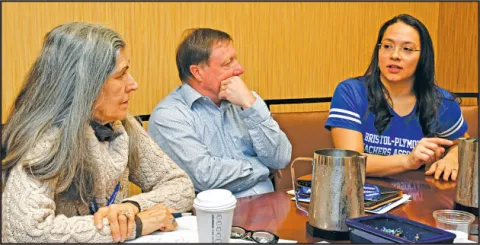
Like Parolisi, Jim Scott, president of the Attleboro Paraprofessionals Association and a SoMEAN member, said he learns a lot by routinely meeting with leaders and members in his region.
"Coalition equals conversation," said Scott, underscoring that the meetings he has attended work well because they have been open to all members, not just leaders.
Scott, a new president and a fairly new union activist, finds the experience of coalition work incredibly educational — and it has opened his own members’ eyes to the issues that paraprofessionals face around the region.
"We’ve been able to see how others are dealing with issues and handling them in negotiations," he said.
Several activists echoed a common theme regardless of where they work: Coalitions have brought more members into the work of the union. "We’re getting more MTA members active and engaged in their own locals by having them speak out and act for other locals," WeMEAN’s Beaulieu observed.
In addition, the locals are seeing broader engagement with non-educator unions, as educators in both Western and Southeastern Massachusetts have teamed up with municipal employees to push back against proposed changes to health insurance benefits.
"MTA members are at the forefront of a movement asserting the rights of workers," Najimy said. "As we continue to build this solidarity among our locals and across other unions, we will improve our schools and our communities."