What type of homeowners insurance do you have?
HO3 versus HO5: Know the difference
When it comes to homeowners insurance, there’s a small but important difference to note between an HO3 and HO5 policy.
A "peril" is a specific cause of damage, such as fire, wind or theft.
What’s the difference?
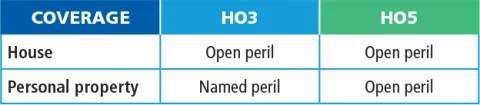
The HO3 and HO5 policies both cover a policyholder’s house on an open-peril basis. The difference is in how each protects personal property.
Named peril: Coverage for all perils that must be listed by the policy.
Open peril: Coverage for all perils unless specifically excluded by the policy.
With a named-peril approach, the HO3 policy states exactly which perils are covered. If the peril is listed, the policyholder is covered.
The open-peril language on the HO5 policy form is broader by not itemizing which perils are covered. Instead, it identifies which types of damage are excluded under the policy. If the peril is not listed specifically under the exclusions, the policyholder is covered.
What does ’personal property’ include?
Since the HO3 only covers personal property on a named-peril basis, it is important to know what type of property this involves. Personal property may include items such as furniture, electronics and clothing. If a policyholder under an HO3 form experiences a loss that is not a listed peril, while the dwelling itself may be covered, any damage to personal contents would be excluded. This would result in the homeowner having to replace the damaged contents out of pocket.
Check your policy form
If you reference your most recent homeowners policy, the declarations page should list which form your specific policy includes ("HO3 Special Form" or "HO5 Comprehensive Form"). If you notice that your policy is insured on an HO3 form, call your insurance agent to discuss the benefits of upgrading to the HO5 form.
Contact EIA for a free consultation

Educators Insurance Agency is a local agency based in Worcester. Experienced and licensed agents work with MTA members every day to help serve their auto and home insurance needs. EIA partners with various insurance carriers to offer comprehensive coverages that meet an individual’s specific needs. The EIA team will also review your account to determine which discounts you may be eligible for, such as the MTA group discount.

To start your free insurance consultation, send a copy of your current homeowners or auto policy to EIA by following the instructions using the QR code to the right. EIA’s agents will review the policy and seek quotes that best fit your needs.
You can also visit www.educatorsinsuranceagency.com to request a quote or find more information. Or call us at 888.908.6822. We would be happy to speak with you!

All products are underwritten by The Hanover Insurance Company or one of its insurance company subsidiaries or affiliates ("The Hanover"). Coverage may not be available in all jurisdictions and is subject to the company underwriting guidelines and the issued policy. This material is provided for informational purposes only and does not provide any coverage. Educators Insurance Agency ("EIA") is a member of The Hanover Insurance Group, Inc. For more information about The Hanover, visit www.hanover.com. EIA also offers products through the Andover Insurance Company, which is not a member of The Hanover Insurance Group, Inc. LC 2021-517

Editor: Carolyn Cassiani
The MTA Advantage is published three times a year as a supplement to MTA Today by MTA Benefits, Inc.
2 Heritage Drive, 8th Floor, Quincy, MA 02171-2119
Tel: 800.336.0990 • Fax: 617.557.6687
Website: mtabenefits.com
No dues dollars are ever used to market MTA Benefits programs.