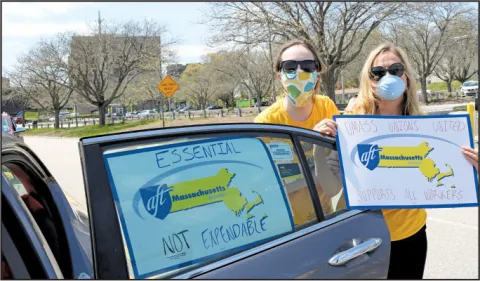
MTA members and other unionized workers on public higher education campuses are in the forefront of fighting for funding to save jobs and programs — and they are working furiously to help protect the health and safety of students, staff and faculty during the COVID-19 pandemic.
Public higher education campuses moved to remote learning models last spring, around the same time that public preK-12 schools did. The transition was chaotic, as those teaching courses worked hard to stay connected to their students while staff members crucial to campus operations were increasingly targeted for layoffs and furloughs. Many of the employees still working in person on campuses were asked to fulfill their responsibilities with insufficient personal protective equipment amid a lack of clear health guidelines.
During the summer months, MTA members devoted extensive time and energy to advocating for the resources necessary to prevent job losses and ensure needed protections. A petition sent to University of Massachusetts President Marty Meehan and state Higher Education Commissioner Carlos Santiago demanding job security, funding and safe working conditions amassed thousands of signatures.
The MTA also took the lead on setting up Massachusetts Agrees, a media campaign in support of public higher education.
"Clearly, some campus and state leaders exploited the pandemic to unleash damaging budget cuts," said MTA Vice President Max Page, who is a UMass Amherst professor.
Bristol Community College and UMass Lowell, for example, rolled out layoff and furlough plans affecting hundreds of employees well before there were definitive budget numbers from the state or full knowledge of how much federal assistance would be available. In early August, the Legislature committed to funding public higher education at its pre-pandemic level through October.
The MTA immediately demanded that all furloughs and layoffs be halted, especially given the likelihood of additional federal funding.
As the fall semester approached, however, the MTA’s higher education members remained on edge. Many of their concerns were aired at an emergency virtual hearing on Aug. 3. More than 700 higher education members and 12 state legislators joined the webinar.
Tiffany Gayle Chenault, president of the Massachusetts Community College Council chapter at Salem State University, told the educators on the teleconference that she is worried that widespread staff cuts and furloughs are setting students up for failure — in addition to future debt. She pointed out that students of color make up 40 percent of the Salem State student population, and 50 percent of the students at the university are eligible for Pell Grants. Making it more difficult for students to succeed at Salem State will only deepen racial inequality, she said.
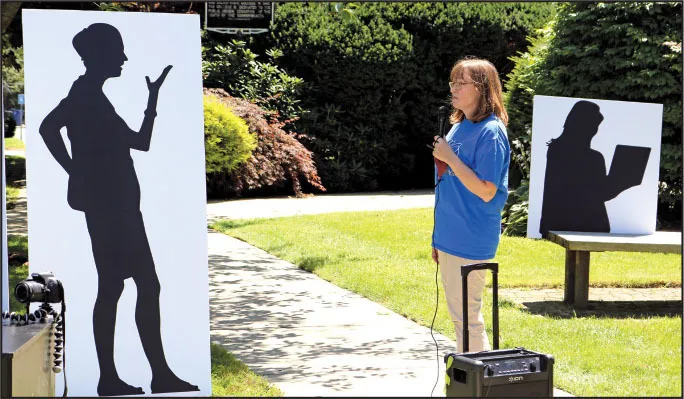
Salem State students joined faculty and staff in demonstrating the impact of budget cuts with a protest that dramatized the impact of "missing people" on students. Students on a campus green tried to have questions about their work answered — but instead of finding a real person who could help, they were met silently by life-sized silhouettes. "Missing people" are also having an effect on faculty and staff, who cannot meet with colleagues to plan curriculum or find out about child care options on campus.
Community colleges have seen a rash of harmful cuts. Springfield Technical Community College is cutting seven programs that will eliminate at least 21 jobs, along with career and educational opportunities available to area residents. Quinsigamond Community College in Worcester closed its Children’s School, which has trained students in the education program and provided early education for the children of QCC students, staff and faculty, as well as area residents.
The MCCC has been fighting the various cuts throughout the spring and summer, and MCCC President Margaret Wong accused community college presidents of living in a "COVID bubble, talking only among themselves."
The community colleges and state universities, overseen by the state Department of Higher Education, have adopted a patchwork of campus reopening plans.
The UMass system announced a budget in July that would lead to furloughs for more than 3,000 workers and the loss of 2,000 positions. Plans were changing as late as August, with the Amherst campus announcing that students should not plan to live in dormitories or take up residence in the area if all of their courses are being taught remotely.
While that proved to be a significant victory for workers concerned about the lack of health and safety measures at UMass, MTA members immediately started organizing to save jobs.
MTA President Merrie Najimy called the UMass budget plan misguided.
"The members of the MTA will fight these cuts and demand from the federal and state governments the funding that our public schools and colleges need," she said. "Our members are the protectors of our campuses. We will not allow a disconnected Board of Trustees to do irreparable harm to the essential institutions that are our public colleges and universities."
The funding issue may seem daunting given the state’s narrative about the amount of tax revenue that is being lost during the coronavirus crisis. But the Legislature has avoided taking a stand on adopting progressive revenue options that could help fund public education by increasing taxes on corporations, their wealthy shareholders and the 19 billionaires who reside in the state. The MTA is part of the Raise Up Massachusetts coalition, which is fighting for state investment in communities rather than deep budget cuts.
The MTA once again ran a Summer Member Organizing Program, in which members engaged their union colleagues and potential union members on joining and being active in the MTA and local associations. Twenty summer member organizers worked with higher education locals.
Within the first three weeks of the organizing effort, the organizers held more than 150 one-to-one conversations, made more than 800 phone calls and sent 1,200 personalized messages to members and potential members.
The strength of public higher education in Massachusetts will largely align with the strength of the unions on public college and university campuses.
"The response by public higher education administrators and leaders to both the health and financial impacts of the COVID-19 crisis has been terrible," Najimy said. "People have been put in unsafe situations, potentially thousands of dedicated public employees will lose jobs, campuses are letting hundreds of positions go unfilled, and vital programs that support students and provide opportunities are being scrapped.
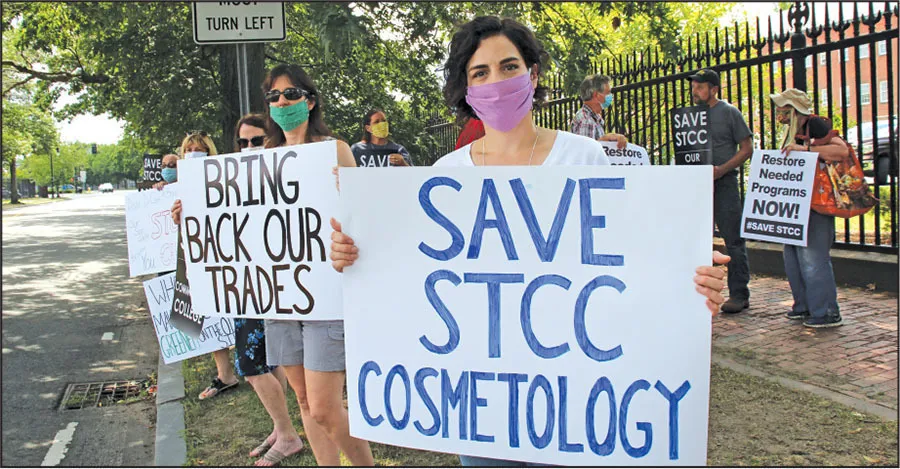
"The impact will be devastating and put the Commonwealth at risk of losing higher education as a public good," Najimy continued. "Now more than ever, we need our public higher education system to live up to its mission to serve working and middleclass people and people of color, as well as to be ready to meet the demands of an evolving economy — and to do it safely. Public higher education is as much a right as preK-12 education is."
For updates, visit massteacher.org/highered and massachusettsagrees.org.

We customize. You could save hundreds.1
MTA Benefits has partnered with Liberty Mutual Insurance to bring you customized insurance so you only pay for what you need. You’ll enjoy valuable savings on auto and home insurance along with great benefits like 24-Hour Claims Assistance, Accident-Free Discount2, and Loss Forgiveness3.
For your free quote, call 800.699.4378
or visit www.libertymutual.com/mtabenefits
Client #136601
1Based upon national data collected between 8/1/15 and 8/1/16 for customers who switched to Liberty Mutual. Individual premiums and savings will vary. 2Discounts and savings are available where state laws and regulations allow, and may vary by state. Certain discounts apply to specific coverages only. To the extent permitted by law, applicants are individually underwritten; not all applicants may qualify. 3Subject to eligibility requirements. Benefits and eligibility requirements may vary by state. Coverage provided and underwritten by Liberty Mutual Insurance and its affiliates, 175 Berkeley Street, Boston, MA 02116 USA. Equal Housing Insurer. ©2019 Liberty Mutual Insurance 12457758
This organization receives financial support for offering this auto and home benefits program.
AFF_686950_04 MA 2019/06