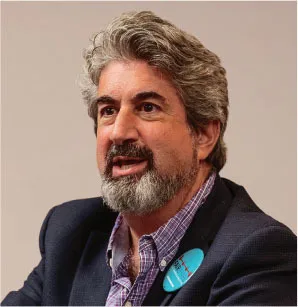
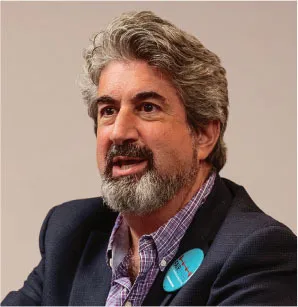
I had the pleasure recently of canvassing for Question 2 in Westfield with Susan Edwards, a member of the Springfield Education Association. As we walked our "turf," Susan shared a story of a retired woman she had met on a previous day of canvassing. In high school, the woman hadn’t done well on standardized tests, but she had managed to get through and went on to college to find that she was brilliant. She became a nurse practitioner and cared for thousands of Westfield residents, from birth to death.
The story reminded me of what U.S. Rep. Ayanna Pressley said when she endorsed Question 2 on an MTA webinar this month: "For someone like myself who was a poor test-taker, if educators had not realized who I was holistically and wanted to invest in and nurture and cultivate and encourage my leadership skills, I don’t know where I would be today."
Here are two people who found a way past the obstacles of testing, in part because they were not subjected to a make-or-break MCAS exam that might have denied them a diploma.
This is the tragedy of the high-stakes use of the MCAS to determine who gets a diploma: It adds yet another barrier to opportunity for our young people, so often students of color, from working-class families, who have disabilities or are acquiring English as a language.
Our job as educators is to nurture our students as future citizens, adults, parents, neighbors, community members and workers. But the regime of the high-stakes MCAS takes away time that should be devoted to authentic learning and prevents so many young people from demonstrating their knowledge and discovering their full capabilities.
A few weeks back, I attended an online memorial service for an old friend’s mother. As I read the obituary I realized that the "funeral home" the family was using was actually Recompose, a company that has pioneered a new approach to natural burial. The company is the product of a former student, Katrina Spade, who developed the idea in her thesis design project under my guidance at UMass Amherst. Katrina, who grew up in New Hampshire, wasn’t subjected to a high-stakes standardized test. I think of her creativity, nurtured by public school educators all the way through college and beyond, and see how easily it could have been crushed by a high-stakes testing regime, which is the fate for so many students.
The opposition likes to emphasize how "only" 700 students a year are denied a diploma, even though they have passed all their classes. (There are many who drop out after having failed the tenth-grade test, and many thousands who lose up to a month of class time devoted to test prep and test taking.) Just think of the possibilities lost by just one student being cut off from the opportunities offered by a high school diploma. A life of potential narrowed by being denied the credential they earned over four years of classes; effectively being told they are failures. How much brilliance, how many great ideas, how many contributions to society have we lost because of this unhinged devotion to a one-time test?
On Nov. 5, we will bend the curve away from the failed model of high-stakes testing. We will redirect public education to authentic learning in classrooms. And we will look forward to our society benefiting from the next brilliant nurse, the next congressional representative, the next world-changing inventor.