Photographs by
Public preK-12 education has long had a reputation as a profession offering decent, if not spectacular salaries, good benefits, a pension and fairly stable employment. And it provides a chance to guide young people through an impressionable period of their lives.
Many Massachusetts educators say they find much of that is still true, that they love their specialties and working with children. But comparatively, educators say they feel they’re losing ground financially, and in work-life balance measures, when they look at their private-sector spouses or friends.
Fewer people, overall, are going through the private and public schools of education that prepare Massachusetts college students for teaching.
More people are quitting before retirement, not just newer educators, but at mid-career. Something has changed.
The result is job openings for educators are remaining open longer, even in suburban districts that have reputations for better salaries, benefits and working conditions. In many of the largest districts in Massachusetts, job postings remain up year-round. Jobs are plentiful, and not just for positions in traditional shortage areas, such as science, special education and English language learners.
Barry Davis, president of the Haverhill Education Association, is a music teacher. In his specialty, applicants used to far outnumber openings. Now he’s noticed that openings are getting filled, but they’re staying open longer.
Davis said he thinks social media has unveiled many of the challenges of the teaching profession. People can see the posts and see what it’s like in schools. Students in classrooms, where future teachers are created, also observe what’s happening around them and the behavioral issues and other challenges confronting educators.
"It’s getting harder and harder to put a brave face on every year," Davis said. "Kids see that and notice that. And we don’t make enough money. Young kids have a better perspective on that than I did even a decade ago."
The wages and working conditions in Haverhill improved following an educator strike in 2022, and that helped, he said. But now surrounding districts are lifting their salaries, so the competition for the workforce continues.
Keith Michon, president of the Fall River Educators Association, sees that circulation out of Fall River and into surrounding districts that pay better, including Taunton, Attleboro and New Bedford.
But he thinks educators are also leaving because the job has become less fun, less creative. "The overemphasis on standardized testing has stolen some of the magic from the profession," Michon said. "It really takes the enjoyment away from the profession that a lot of people found."
Becky Abate, an educator for almost 20 years, is president of the Hopkinton Teachers Association. At least two people in her middle school left last year before retirement. She thinks the post-pandemic shift in work culture to work-from-home for professionals in private jobs is creating new competition for educators, who are qualified for those jobs.
Private-sector jobs now offer not only more generous pay in many comparisons, but also better benefits that educators must fight for in their contracts.
"We just don’t have competitive benefits," Abate said. "What we saw happen in Andover and Newton, a big thing that they were trying to negotiate was paid leave. And those districts had to go on strike to get that. And that’s something that people in the private sector are getting day one."
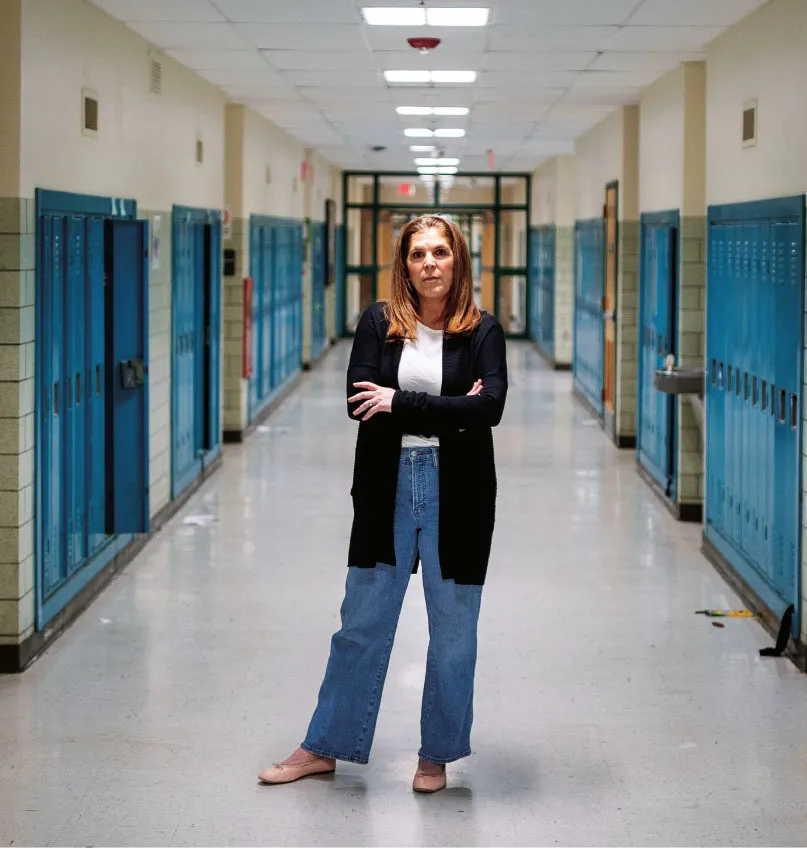
Over the past decade, enrollments in Massachusetts programs that prepare licensed educators have dropped by more than half, from 21,866 in the 2011-2012 academic year to 8,922 last school year, according to state data collected by the MTA’s Center for Education Policy and Practice. These enrollments include public and private universities with educator prep programs.
The state average for teachers completing these programs and remaining employed in a Massachusetts public school for at least two years was 61.5 percent in June 2023, according to state data.
One of the prospective educators currently enrolled is Ashley McCreedy, a senior at UMass Lowell and president of its chapter of the Student Education Association of Massachusetts.

A passion to teach prompted her to switch majors from business to education in her first year. She’s wanted to be a teacher for as long as she can remember. She’s aware of the staffing issues that are affecting many schools.
"I also worry about my own ability to maintain a work-life balance," McCreedy said.
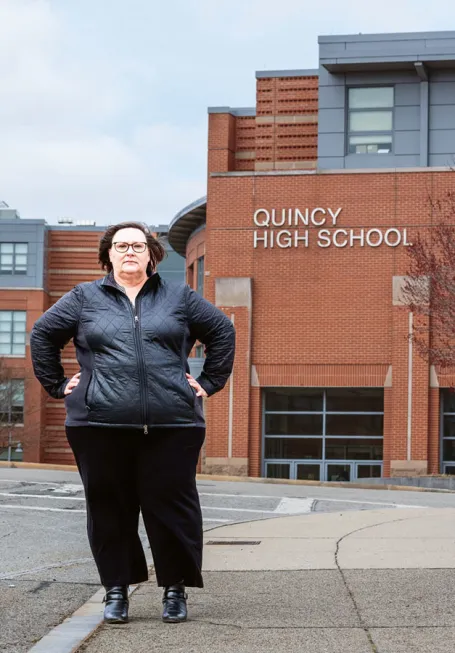
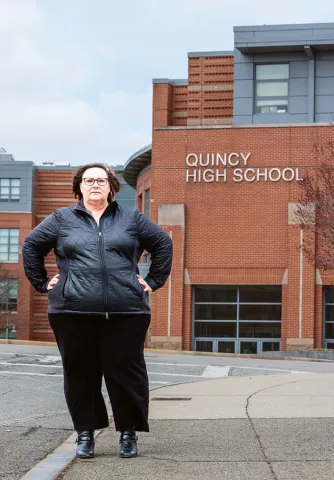
Gayle Carvalho, president of the Quincy Education Association, is a former journalist who switched careers to become an educator 16 years ago. In her roughly 900-member local, about 300 people have left their jobs over the past three years. "Pre-COVID, we might have had 30. It’s a huge number," she said.
What’s happening in Quincy and statewide is a combination of factors. Many more mid-career people are leaving. In the aftermath of the pandemic, the educational environment has changed. Districts are expecting more and putting more pressure on educators to learn new curriculum and take on more work.
Financial factors also are paramount. Educators are finding that the pension that used to provide them with a stable retirement is not keeping up with the cost of living in Massachusetts, one of the most expensive areas in the country.
Along with bargaining for improved benefits and pay, Carvalho said entering educators need to be prepared more thoughtfully, so they aren’t surprised by what they encounter in schools and feel better supported.
Improved educator training, better community building within schools, and supportive mentorship and outreach for Education Support Professionals are some of the ideas suggested by Christine Mulroney, president of the Framingham Teachers Association.
The ESP unit has had openings all year, Mulroney said. Low pay, high workloads and limited training are all combining to make these jobs challenging.
The workload demands and the pay for all educators are failing to align, she said. Her daughter, a mid-level manager at a retail furniture store, makes more money after six years than Mulroney, who has worked in public education for more than 25 years. "That’s insulting," she said.
Sarah Nathan contributed to this report.