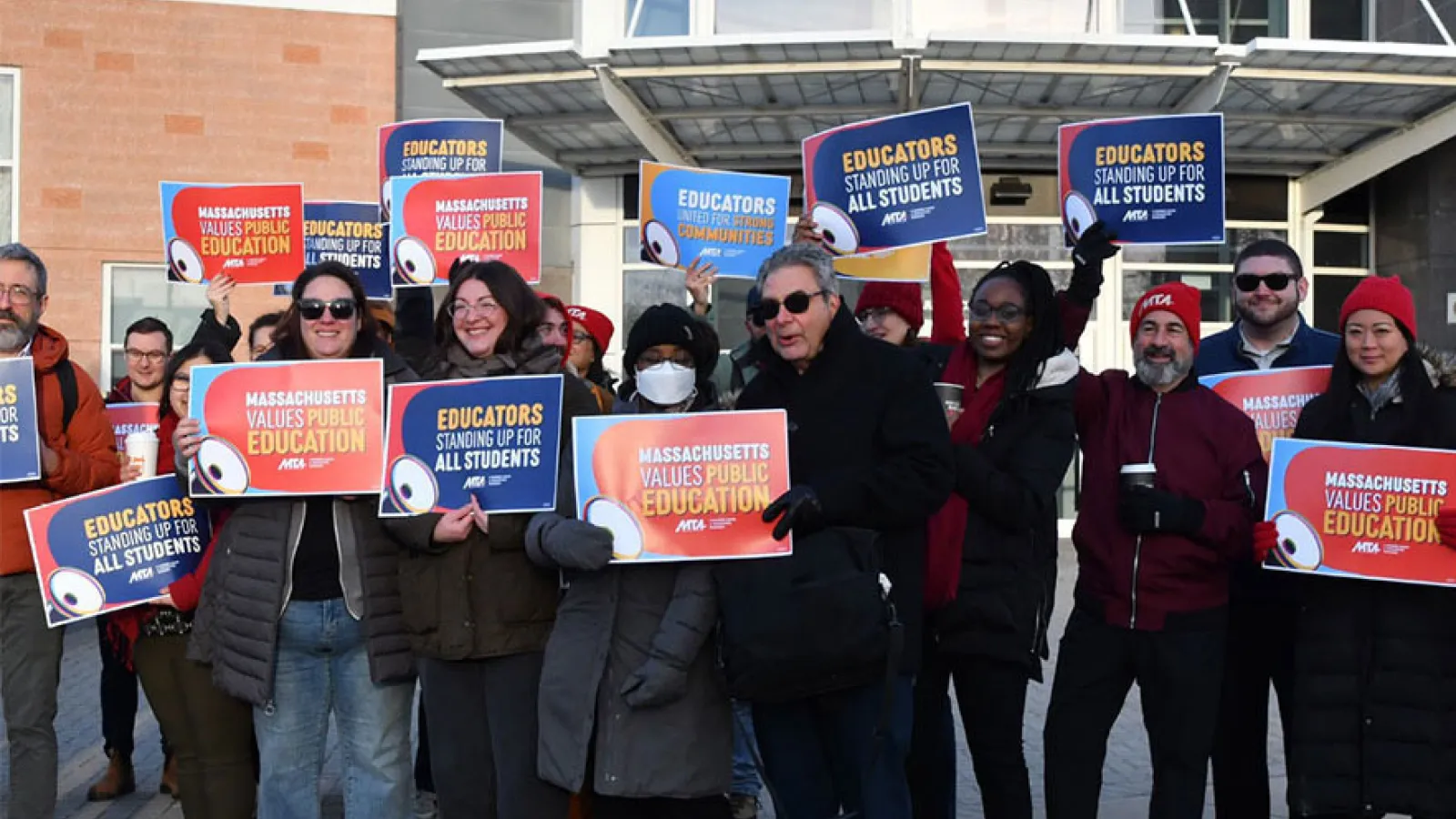
Educators say they’re unsettled, but not intimidated, by a new administration in Washington that has threatened to withhold federal funds if schools continue to uphold diversity and equity programs.
Protecting their students and colleagues is job one, said several MTA members recently, when asked about the wash of executive orders and statements coming from the Trump administration that seek to undermine public education.
An executive order that describes the dismantling of the U.S. Department of Education, signed by President Trump on March 20, quickly drew a federal lawsuit from the NEA and AFT and two school districts in Massachusetts – Somerville and Easthampton. Trump signed the order after Linda McMahon, the new Secretary of Education, cut half of the department’s workforce.
The Department of Education provides funding for programs that include Pell Grants for low-income university students, Title I funds for schools aimed at countering the impact of student poverty, and funds for students in preK-12 who have special education needs.
These funds are critical, local presidents said, and they have active constituencies. It’s too early to tell if federal funds will be cut broadly in Massachusetts. But in his executive order, Trump wrote that any allocation of federal education funds would be contingent on a requirement that programs terminate "illegal discrimination obscured under the label ‘diversity, equity and inclusion’ or that address ‘gender ideology’."
In a letter sent to the federal Department of Education on April 9, state Secretary of Education Patrick Tutwiler said Massachusetts would not abandon its diversity programs. "Massachusetts is home to the best K-12 schools in the country," he wrote. "...We know that having people of diverse perspectives and backgrounds – as educators, administrators, and leaders in our education system – is a strength, not a flaw. It is a reason for our success, not a barrier to it."
Earlier in April, the Trump administration terminated $106 million in federal grants for K-12 schools in Massachusetts aimed at offsetting pandemic-related learning losses, according to Governor Maura Healey, who condemned the action. The money was being used for math tutoring, mental health support for students and environmental improvements in schools, according to Healey.
The Trump administration also is trying to claw back grant programs aimed at strengthening teacher recruitment. One program provided $6 million to Massachusetts for Education Support Professionals in Boston, Springfield and Holyoke to become trained as licensed teachers. A lawsuit, filed by Massachusetts Attorney General Andrea Campbell, restored the nationwide program under a temporary action. But in April, the U.S. Supreme Court allowed the defunding to continue until the merits of the case are heard.
Nick Cream, president of the Holyoke Teachers Association, said the program is popular and sorely needed. The program, he said, is a good fit because paraprofessionals are closely tied to the community. And in Holyoke, which has a large Puerto Rican population, many ESPs speak Spanish. "You can have someone who is already comfortable and well-versed in a community and now you’re going to get them the education, skills and training they need to be teachers."
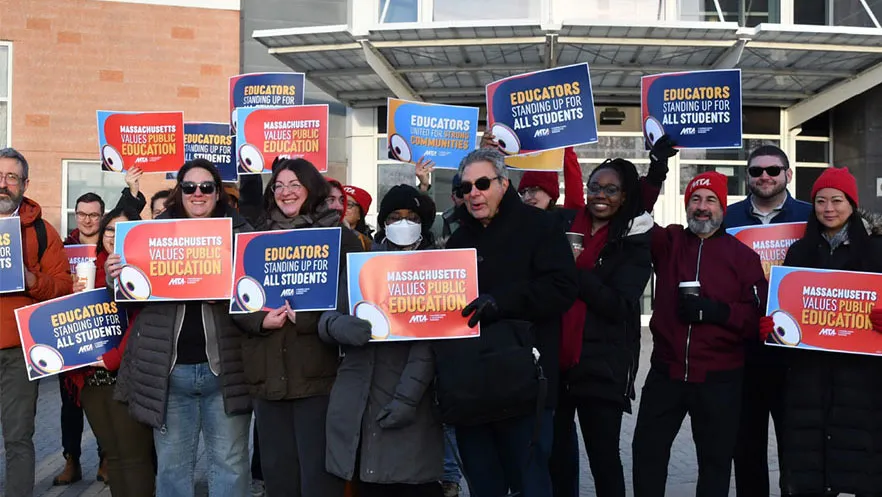
In response to the threat of federal funding cuts, and interference in public education, many local unions are fighting back. They’re working with their communities to strengthen bonds with community organizations, particularly those that work with youth and with immigrant families. And they’re letting their communities and students know that they’re not hiding.
The state education secretary in Massachusetts, meanwhile, has refused to comply with a letter from
"Keeping our heads down is not going to support our students," said Jane Chapin, a co-president of the Revere Teachers Association. Among other initiatives, her local is working to organize support for a Safe Zone Schools policy in Revere, which would set up parameters for how schools would respond to a request for student records or enforcement action by Immigration and Customs Enforcement. The NEA has a template on its website for a Safe Zone School policy.
The School Committee has not yet approved the policy, but Chapin said she thinks community and educator pressure will succeed. "It sends a message to the community: You’re safe at school. We want you to come to school."
She worries that students are afraid and not coming to school, in communities throughout Massachusetts, because of the anti-immigrant rhetoric from the new administration. In one of his first actions, Trump removed a policy that generally protected schools, churches and other community areas from immigration enforcement sweeps.
"The current administration has been very clear about their intentions," Chapin said, of the potential for federal funding cuts and immigration enforcement. "And they’ve proven, time after time, that they plan to follow through. We must act. We must organize."
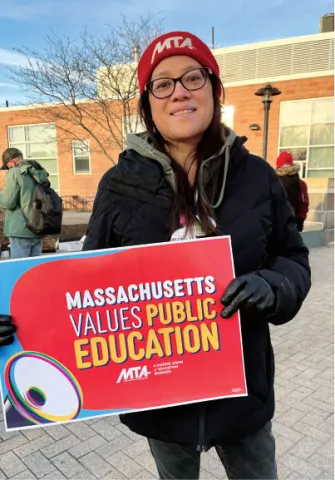
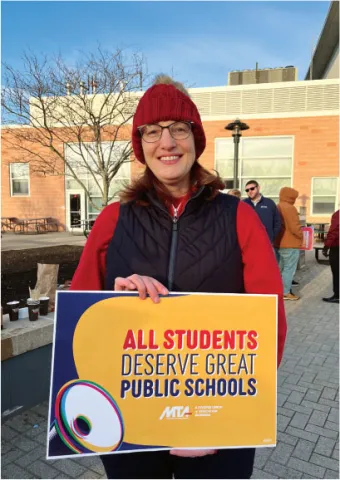
A series of educator walk-ins at preK-12 schools throughout Massachusetts have taken place over the past six weeks, including cities near Boston and small communities in western Massachusetts. In these events, educators have pledged to stand up for their right to teach and their students’ right to learn.
On social media, locals are sharing their resolve. Hampshire Regional Education Association, which represents educators at a regional district in Westhampton, posted a message in late February that said: "In light of recent federal actions regarding immigration and gender identity, the members of the HREA executive board declare that we are committed to ensuring that our school is a place where all students can learn and feel a sense of belonging."
In its federal lawsuit targeting the closure of the Department of Education, the organization Democracy Forward included as plaintiffs the Easthampton and Somerville public school districts and the American Federation of Teachers —Massachusetts.
The NEA, meanwhile, is among a group of education allies that have sued the administration over the Department of Education layoffs.
The loss of federal funding could mean millions for districts, for services that are vitally needed for students.
"I absolutely think the districts should be fighting back," said Kirsten Frazier, an educator with the Educational Association of Worcester. "Not only is it a financial concern; it’s a human rights issue. We need to protect our students and our educators. If it means fighting back in the courts, then that’s what we need to do."
Frazier, who oversees the Gay Straight Alliance club at her school, said educators can show support for students who are LGBTQ+ by letting them know that they have a safe place in school. "The simplest thing is just to let them know you’re there and are a safe person to talk to."
Frazier, who uses they/she as pronouns, said they aren’t going anywhere in their email signatures. "Until they tell me I have to take them out, they’re going to be there."
For information on the Safe Zone School policies, please visit nea.org/resource-library/safe-zone-school-districts.
For MTA resources on immigration rights, please visit massteacher.org/protect.