I opened up SchoolSpring, an education job website, the other day. I typed in "teacher" and found that there were 4,904 openings in Massachusetts. I typed in "para" and found 993 openings. There were 419 "aide" positions. And 124 "instructional assistant" positions.
Then I recalled the NEA survey data from this past year: 55 percent of NEA members who were surveyed said they were thinking of leaving the education profession.
There is no technical definition of "crisis," but let’s be clear: the educator shortage crisis is upon us. Several articles in this issue of MTA Today describe how multiple factors have led us to this place. There’s the 20 percent "pay penalty" for educators in Massachusetts – that’s the amount our members lose when they choose this profession as opposed to another with similar levels of educational requirements. But equally important is the MCAS exam and its narrowing of the curriculum, the lack of professional autonomy our members increasingly experience, and the behavioral issues that are not being addressed by administrations.
The saddest words Deb McCarthy and I hear from members are: "I can’t encourage my students to go into education as a profession."
As many of you know, when I’m not serving as your president, I teach about the histories of cities and architecture at UMass Amherst. While watching the filming of TV ads for the Fair Share Amendment campaign, Deb and I spent a few hours in a public school in Lynn. I took note of the hidden beauty beneath the grime and mold of that building, as we dodged buckets catching water from leaky ceilings. This school was built as part of the New Deal of the 1930s, one of the greatest eras of public investment in schools, colleges, roads, bridges, housing and parks. I imagined what it must have felt like for this community to see this once glorious school building rise out of a neighborhood of three-deckers.
Imagine if all of our school buildings were built to be the finest structures in every city and town.
Or if we paid educators as if we, as a society, truly meant the praise regularly bestowed on our members – "You are the most important people in our town."
Or if we provided young people a truly debt-free public college education, so that they did not enter their first classroom as a professional educator burdened with decades of debt.
Or if we treated educators as the true experts and said, "We (principals, superintendent, school committees, DESE) will give you the resources you need, and trust that with sufficient time to plan, prepare and collaborate you will create joyous, creative classrooms where students will learn, and love to learn, and where they will see what it means to be a caring, able and committed adult."
We do not have that public education system yet. But one thing I know for sure: We are making strides toward achieving it, and that no organization other than the MTA, with our 400 locals and 117,000 members, can help us achieve it.
And when we do, I’ll revisit SchoolSpring, and find that all the open jobs will have been filled with the next generation of educators.
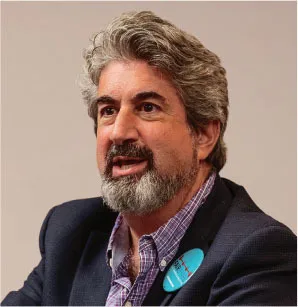
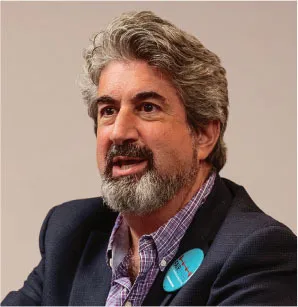
Max Page, MTA President