MTA locals throughout the state negotiated transformational contracts in the 2024-25 school year, many aided by using democratized bargaining. A sampling of highlights provided by the Field and Organizing Division follows:
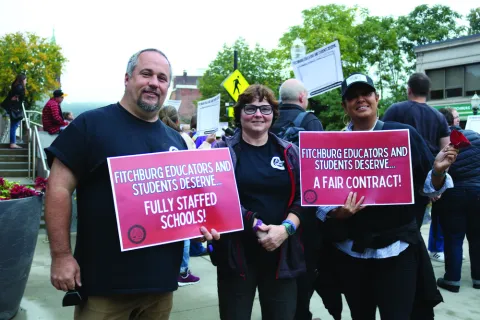
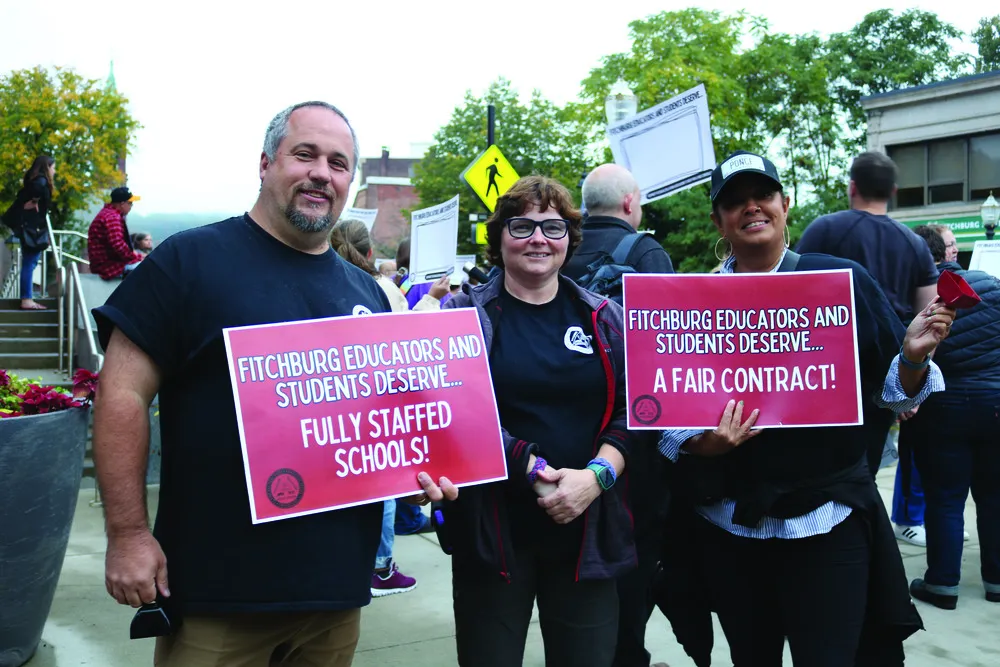
Fitchburg Education Association educators won 21-26 percent pay increases for ESPs and 17.5 percent increases for three-quarters of the teachers, who are at the top step.
Bellingham Teachers Association educators won an 11.5 percent pay raise over three years, plus 10 days of paid parental leave. Lunenburg Education Association educators won 11 percent pay raises over three years, plus 20 days of paid parental leave.
The Faculty Staff Union at UMass Boston raised salary floors by 10-15 percent, increased an antiracism fund pool that is controlled and distributed by the union, and locked in across-the-board raises, rejecting management’s push for merit pay from the state’s financial parameters.
The Beverly Teachers Association won six weeks of paid parental leave, a $15,000 pay increase for Education Support Professionals and 16 percent pay raises over three years for licensed staff.
Springfield Education Association educators negotiated 13 percent pay raises over four years.
The Boxford and Topsfield teachers associations both won 12-21percent pay hikes for ESPs over three years, plus four weeks of paid parental leave.
Everett Teachers Association educators won 11 percent raises over three years for teachers, 34-52 percent increases for ESPs, four weeks of paid parental leave and 50 percent pay for eight additional weeks of leave.
On the Cape and Islands, the Barnstable ESPs won an improvement to their health insurance split from 50/50 to 70/30, with 70 percent paid by the district. The Martha’s Vineyard Educators Association won four weeks of paid parental leave.
Somerset Teachers Association educators won an average 14.7 percent pay increase over three years.
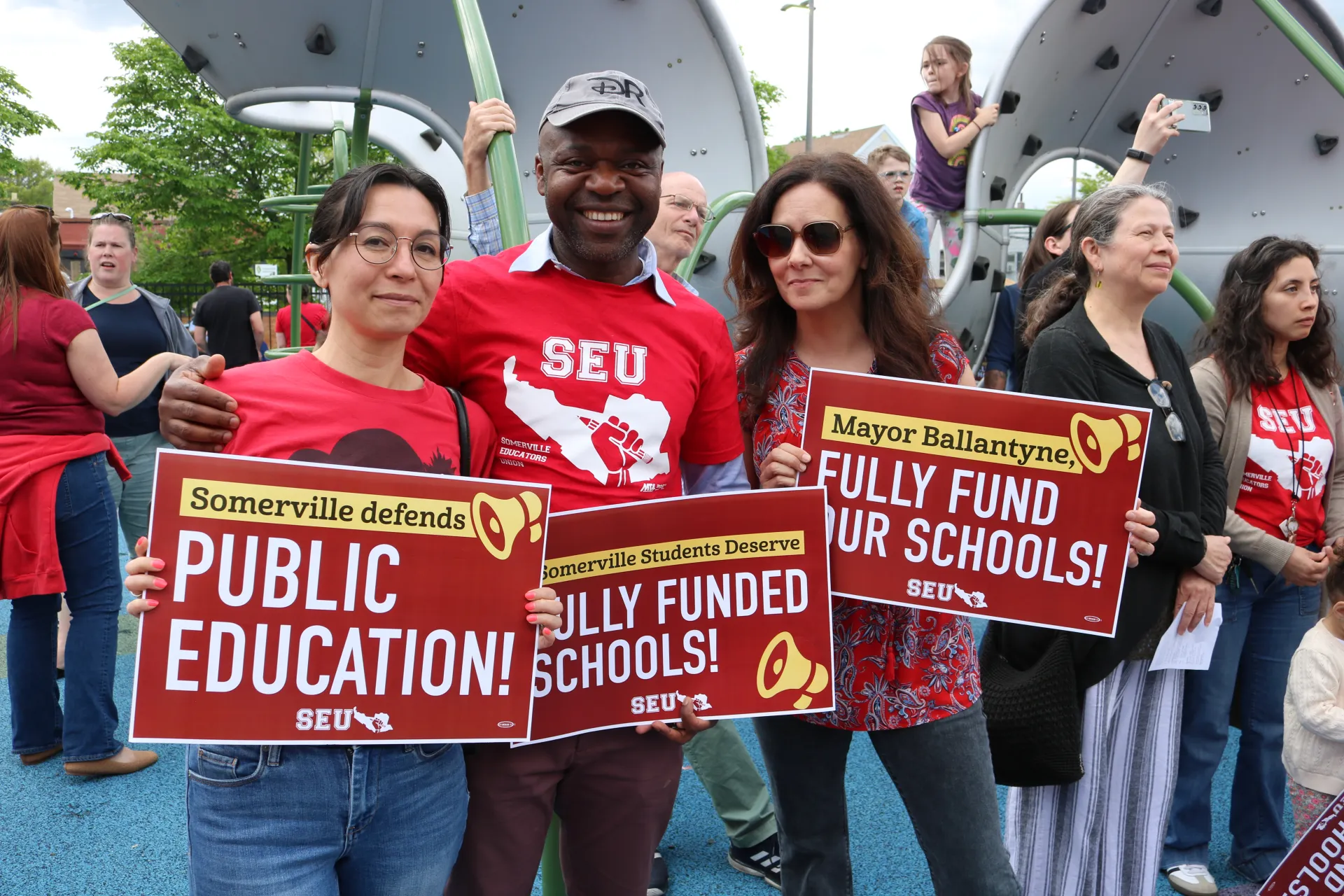
The Somerville Educators Union won a starting salary of $50,000 for ESPs and 12 weeks of paid parental leave for all educators. The Fall River Educators Association won 17-20 percent pay increases over three years, plus four weeks of paid parental leave.
Impressive contract victories are only possible when local associations organize members to participate in democratized bargaining. Some elements of democratized bargaining include the use of silent representatives, creation of a public bargaining platform, forming a contract action team, or CAT, to work with the local’s bargaining team, securing proposals for the common good, coordinating bargaining among different units in the same local, and deploying a strategic, escalating contract campaign.
The following locals are among those that used silent representatives as part of a democratized bargaining plan: Professional Staff Union - UMass, Classified Staff Union - UMass Boston, Massachusetts Society of Professors – Lowell, the Faculty Staff Union - UMass Boston, Association of Professional Administrators, Massachusetts State Colleges Association, Massachusetts Community College Council, Springfield, Chicopee, Northampton, Southern Berkshire, Agawam, Holyoke, Amherst-Pelham, Longmeadow, Clarksburg, Florida, Rowe, Savoy, Erving, Greenfield, Leverett, Swift River, South Hadley, Belchertown, Southwick-Tolland-Granville, Frontier Regional, Central Berkshire, Mohawk, Union 38, Quaboag, Leicester paraprofessionals, Central Mass Collaborative Union Paraprofessionals, South Worcester County Educational Collaborative, Berlin-Boylston, Sutton ESPs, Keefe Tech secretaries, Blackstone-Millville, Westford, Hudson Paraprofessionals, West Boylston, Maynard ESPs, Clinton, Winchendon, Freetown-Lakeville, Fairhaven, Mansfield, Middleboro, Halifax, Plympton, Easton, Franklin, Bristol-Plymouth, Norton, Acushnet, Mashpee, Dartmouth, Rochester, Barnstable administrators, Upper Cape Tech, Wareham, Dighton-Rehoboth, Haverhill, Malden, Quincy, Watertown, Belmont, Somerville, Canton, Dedham, Waltham, Westwood, Braintree, Abington, TEC Connections Academy, Pembroke, Cohasset, Weston ESPs and Foxboro.