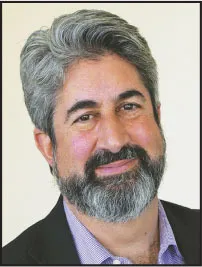
As many of you know, I grew up in Amherst, where I went to the same great public schools my kids would go through decades later. In 1983, I became the first student member of the Amherst-Pelham Regional School Committee. In that role, I faced budget-cutting scenarios and talk about past spending reductions. That was the way of the world, it seemed.
When I returned nearly two decades later to teach at UMass Amherst — I was supposed to teach my first course, "History of New York City," on 9/11, but that’s a story for another day — I immediately ran into threats of 20 percent cuts at the university. Because I was an untenured faculty member, my job was in jeopardy, as were those of many of my colleagues.
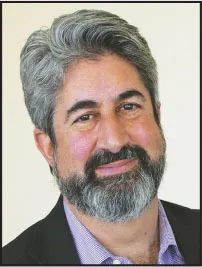
That’s when I began to wonder: How is it that one of the wealthiest states in one of the wealthiest nations on Earth never seems to have enough resources for its public schools and colleges —and for so many other things that are among the basic needs of a civilized democracy? Through my MTA local, the Massachusetts Society of Professors, I began to advocate for the MTA, the largest union in the state, to push for progressive taxes to adequately fund our public schools and colleges.
Now here we are just a short time away from Election Day — and our chance to do what no other generation of activists has been able to do over the century since Massachusetts created the state income tax: make our tax system more progressive by asking the richest people in the Commonwealth, a group that has benefited significantly from essential public investments, to pay a bit more so that all of us can have the public education and transportation systems we need and deserve.
But we are not there yet, and I urge you all to join a canvass, a phone bank, a standout or a rally to support Question 1, the Fair Share Amendment, in these final days before the election. If your local doesn’t have a plan in place, go to fairsharema.com/volunteer to find an action happening near you.
Two billion dollars a year — the amount the FSA would bring in — is a lot of money. And money matters in education, as research has shown over and over again. Massachusetts, for all that we should be proud of, has one of the most unequal systems of public education in the country. The gap between what the wealthiest districts spend and what the poorest districts can afford is revoltingly large.
That’s why we worked for and won passage of the Student Opportunity Act in 2019. By the time we fully implement that measure, our least-well-funded school districts will be on par with some of our wealthiest in terms of per-student spending.
And let’s be clear: In a society ridden by the twin and interlocking systems of capitalism and racism, it is our students of color who suffer the most as things now stand. The Fair Share Amendment — a fight for racial, economic and education justice — will guarantee that the SOA is fully implemented and that we can provide even more of what our students and our members need to help our public schools thrive.
Our public colleges and universities never got their version of the SOA, the Cherish Act. So now it is higher education’s time to see a renewed investment in order to reverse the 30 percent cut we have faced in per-student spending in recent years. This state-imposed austerity has led to massive student debt, the exploitation of adjunct faculty and staff, and decrepit buildings that are slowly being repaired with campus capital debt —which, in turn, has led to more student debt, more exploitation of adjuncts, and insufficient pay for higher education workers in general.
You get the picture of this unvirtuous cycle. But I want to end by lifting up what might be the most profound and long-term impact of winning passage of the Fair Share Amendment.
Decades of neoliberal economics have helped create a mindset that narrows our common imagination. The ingrained belief — hammered away at by business leaders and policymakers and the press — runs along these lines: "There just isn’t enough money." "Belt-tightening is necessary." "I wish we could, but …" And this failure of vision eats away at what we think is possible.
Fair Share can help us widen our view of the horizon, allowing us to move beyond the question: "What can we do with limited money?" Instead, we can ask: "What do students and educators need?" And: "What else, beyond our schools and colleges, do families need to lead a good life — a life filled with dignity and justice?"
Fair Share is not the end. It is the beginning of recapturing our political imagination so that we can realistically dream of what a modern "city on a hill" could be — what a true Commonwealth could be. We can pave the way for our union, for Massachusetts, and for the nation.
This is the last issue of MTA Today to be edited by our longtime director of communications, Jim Sacks. You may not know Jim personally, but you have seen the impact of his work over these past 20 years. If you have read an email from the MTA, seen a quote in the press from any of six MTA presidents, viewed a social media post, caught a campaign ad on your screens, thrilled in the victory on Question 2 (and soon Question 1), seen MTA research on right-wing "education reformers," and, yes, read this publication, you have experienced the professionalism and commitment to the labor movement that have been Jim’s unrelenting work for our union. Jim has insisted on the highest level of quality in the words and images that go out with the MTA name and logo attached. He has worked tirelessly to amplify the voices of our members as the true experts on public education. His abilities will be missed, but his contributions to our union will live on and on.
Letters policy
MTA Today welcomes letters to the editor from MTA members. Letters should be no longer than 200 words. Each letter submitted for publication must address a topic covered in MTA Today, must be signed and must include the writer’s telephone number for confirmation purposes. Opinions must be clearly identified as belonging to the letter-writer. We reserve the right to edit for length, clarity and style. To submit a letter, mail it to MTA Today, 2 Heritage Drive, 8th floor, Quincy, MA 02171-2119, or email it to mtatodayletters@massteacher.org. For additional information, please refer to the guidelines posted on www.massteacher.org.