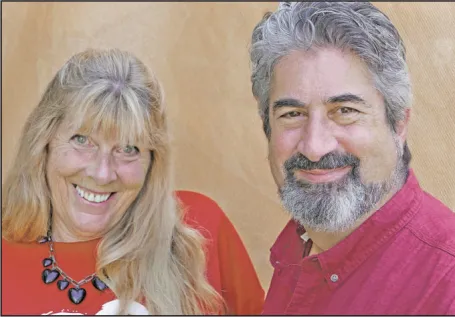
It has been my great privilege to serve as your Vice President for these past four years. The experience of working alongside MTA President Merrie Najimy to lead our union has only reinforced my fundamental commitments — to public education as the foundation of democracy, to unions as the essential organizations for achieving justice, and to the continuing transformation of the MTA into a social justice union based in rank-and-file power. I am thrilled and honored to run for President with Deb McCarthy as Vice President so we can continue to fight for justice — education, economic, racial, and gender justice — and achieve it by growing our union power.
I live in the house I grew up in, and I went to the same Amherst public schools my three children have attended. I am the son of two MTA members and public school and college educators. My father, a refugee from Nazi Germany, was able through the GI Bill to become a professor of English at UMass Amherst, and he was a founding member of the MTA local I would lead 30 years later. My mother, born in Camden, New Jersey, was also a longtime MTA member, as a drama teacher and then as principal of elementary schools in Rowe and South Hadley, before finishing her work as an education professor at Mount Holyoke College. I have had a career as a teacher of American history, with a focus on the history of cities and historic preservation.
As soon as I arrived at UMass in 2001, I became involved in my local, the 1,500-member Massachusetts Society of Professors. I was President of the MSP and led bargaining campaigns that resulted in two pathbreaking contracts, winning paid family and medical leave and pay parity for adjunct faculty. At the end of my term as President of the MSP, I focused on work within the MTA, as a member of the MTA Executive Committee and Board, as head of the Revenue Committee, as Vice Chair of the Government Relations Committee, and now as Vice President.
I am proud of the work we have done together in the past several years to move the MTA forward. We have supported local organizing as the key to our strength as a union by spending the bulk of our time supporting local struggles. We have expanded the summer member organizing program and hired 16 new full-time field staff and bargaining campaign specialists. We are in the midst of transforming our communications, research, and professional learning divisions. Internally, we have embarked on learning and reflection designed to make the MTA into an antiracist union.
At the statewide level, we were proud to lead the Fund Our Future campaign, which won the largest and most progressive reinvestment in public preK-12 education in a generation with the unanimous passage of the Student Opportunity Act. We reversed the prohibition against bilingual education, passed the Freedom to Join bill to ameliorate the worst impacts of the Janus decision, and brought the Fair Share Amendment from the Legislature to the ballot. This spring we are pushing hard for higher education funding, adjunct justice, and debt-free higher education for new educators, as well as policies and funds for diversifying our education workforce. We also have been dedicated allies to groups fighting for affordable housing, climate justice, and immigrant rights. During the pandemic, we have defended the right of educators to protect themselves and their families’ health and we have advocated for coherent, science-based guidelines and safety measures for schools and colleges.
The pandemic has laid bare — and made worse — so many inequalities in the Commonwealth. The pandemic has challenged me, as it should challenge all of us, to raise our expectations about what we in the MTA can achieve.
In the coming years, with Deb McCarthy as my Vice President, I know we can continue our progress toward the more just public schools and colleges our communities deserve by building a more powerful statewide union and almost 400 more powerful locals, and by fighting injustice in its many forms.
The union we want to build
- Develops powerful locals with strong rank-and-file leadership.
- Encourages and supports locals as they engage in open bargaining.
- Establishes regional coordinated bargaining teams to build member power across regions and win stronger contracts.
- Challenges members to engage in reflection and struggle around racial and economic injustice.
- Removes discriminatory barriers to becoming educators, defends antiracist curriculum and pedagogy, and recruits and supports educators of color.
- Demands autonomy and respect for all education workers, including control of the curriculum, an end to punitive evaluation systems, and workplace democracy.
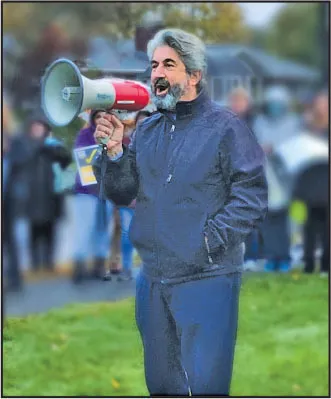
Fighting for justice to win
- The Fair Share Amendment to fully fund public schools and colleges.
- Debt-free public college education for working-class students and educators.
- An end to MCAS and the testbased accountability regime.
- The right to strike for all workers.
- The ESP Bill of Rights, including living wages for all ESPs.
- Pay parity, job security, health insurance, and pensions for adjunct faculty members.
- Safe, green, and healthy public school and college buildings.
As writer and activist Naomi Klein argued in The Shock Doctrine, the forces of the right wing are skilled at exploiting a crisis to implement policies that expand wealth and power for elites. In the wake of the pandemic, they see new opportunities for undermining educators and our unions. But we, too, can use this crisis to imagine our vision for public education, and for our world.
Our union — the largest union in New England — represents some of the most respected and trusted people in every city and town and on every campus in Massachusetts. We must put forward and struggle for our vision of public education. A better world is possible. We in the MTA have the opportunity, and the obligation, to lead the way.