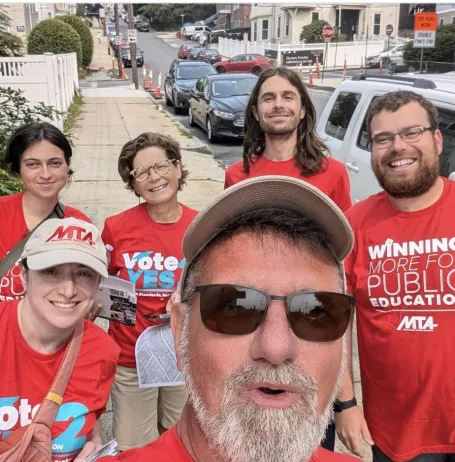
The final push is on to replace the MCAS graduation requirement, as educators and other public education advocates have started canvassing neighborhoods and calling voters to ask for their support on Question 2.
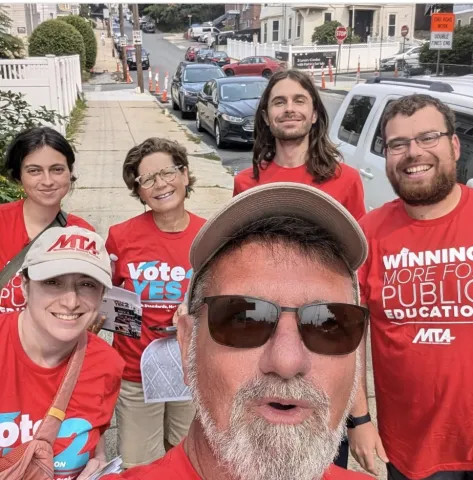
Canvassers for YES on 2 fanned out recently in Chelsea. Photo by Ed Dube.
Question 2 on the fall ballot will ask voters to replace the MCAS graduation requirement with certification by local districts that students have completed coursework aligned with state academic standards in the areas tested by MCAS. The campaign began more than a year ago, when the MTA joined forces with a group of parents also seeking to end the use of standardized MCAS exams as a high school graduation requirement.
Since then, more than 170,000 voters across the state have signed petitions over two rounds of signature gathering, placing the question on the ballot. The statewide election is Nov. 5. Early voting in Massachusetts begins Oct. 19.
MTA Vice President Deb McCarthy has long maintained that MCAS exams are misused and given too much influence.
“We have high academic standards in Massachusetts. Teacher training and curriculum frameworks are grounded in those standards. What high-stakes MCAS testing has done is actually limit educators’ ability to develop successful teaching strategies for students who do not do well on standardized tests but are quite capable of learning the required material,” McCarthy said. “Denying a diploma to these students, who meet every other requirement, is an injustice. And forcing educators to work toward a one-size-fits-all style of teaching is bad policy and practice.”
When Question 2 passes, MCAS exams will still be administered, but used for diagnostic purposes as originally intended. With New York this year ending its use of standardized tests as graduation requirement, Massachusetts will be one of just eight states remaining that hold on to the outdated practice.
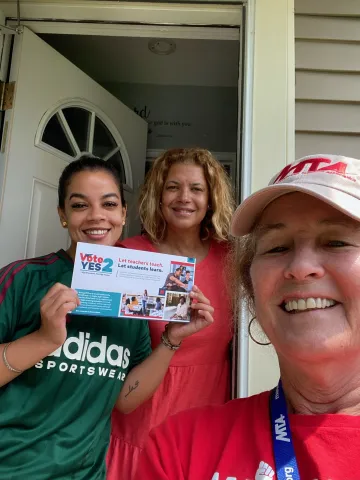
A large, statewide coalition has grown in support of Question 2. Lexington parent Shelley Scruggs, who launched the ballot initiative, said finding allies on this issue has been easy.
Scruggs’ son attends Minuteman Regional Vocational Technical High School and her experiences as the mother of a child who struggles with test-taking drew her to this fight; while gathering signatures to have the question placed on the ballot, she learned she wasn’t alone.
“Most people, when you’re standing outside of Market Basket or the grocery store or the mall, don’t want to sign anything. But when you say ‘MCAS,’ they turn around because they have a story about how much they don’t like it,” she said, adding, “They don’t like it as a student. They don’t like it as a parent, because you just spend an awful lot of time trying to pass the test. My son is in the Class of 2026. He can do the classwork; I don’t want him spending all his time trying to pass these tests.”
Carolyn Armitage is a science teacher in Worcester and took part in a blitz of neighborhood canvassing on Aug. 17.
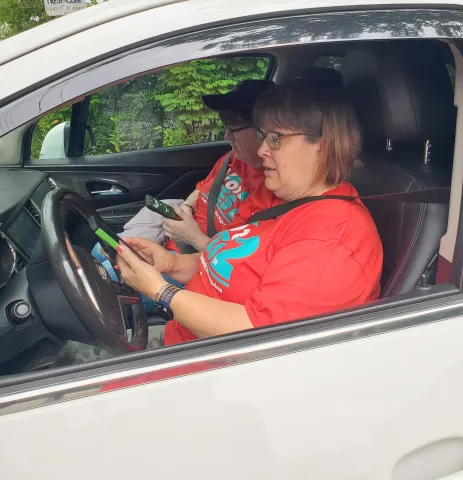
“We have incredibly high standards,” she said. “Removing the graduation requirement will allow us to focus on those standards rather than focusing on how to teach students to take a standardized exam.”
The YES on 2 campaign has already drawn several major endorsements. The Massachusetts AFL-CIO, Massachusetts Nurses Association, Massachusetts Association of School Counselors, the Urban League of Eastern Massachusetts, and the Massachusetts Consortium for Innovative Education Assessment all have voiced organizational support for Question 2.
“This campaign has the support of educators, working families, community activists and students,” said MTA President Max Page. “The people closest to public education are saying in one, unified voice that it is time to end the punitive practice of using a one-size-fits-all standardized test as a high-stakes graduation requirement.”
For more information on the YES on 2 campaign, please visit the website at https://www.yesonquestion2ma.com/join.